The one thing to watch
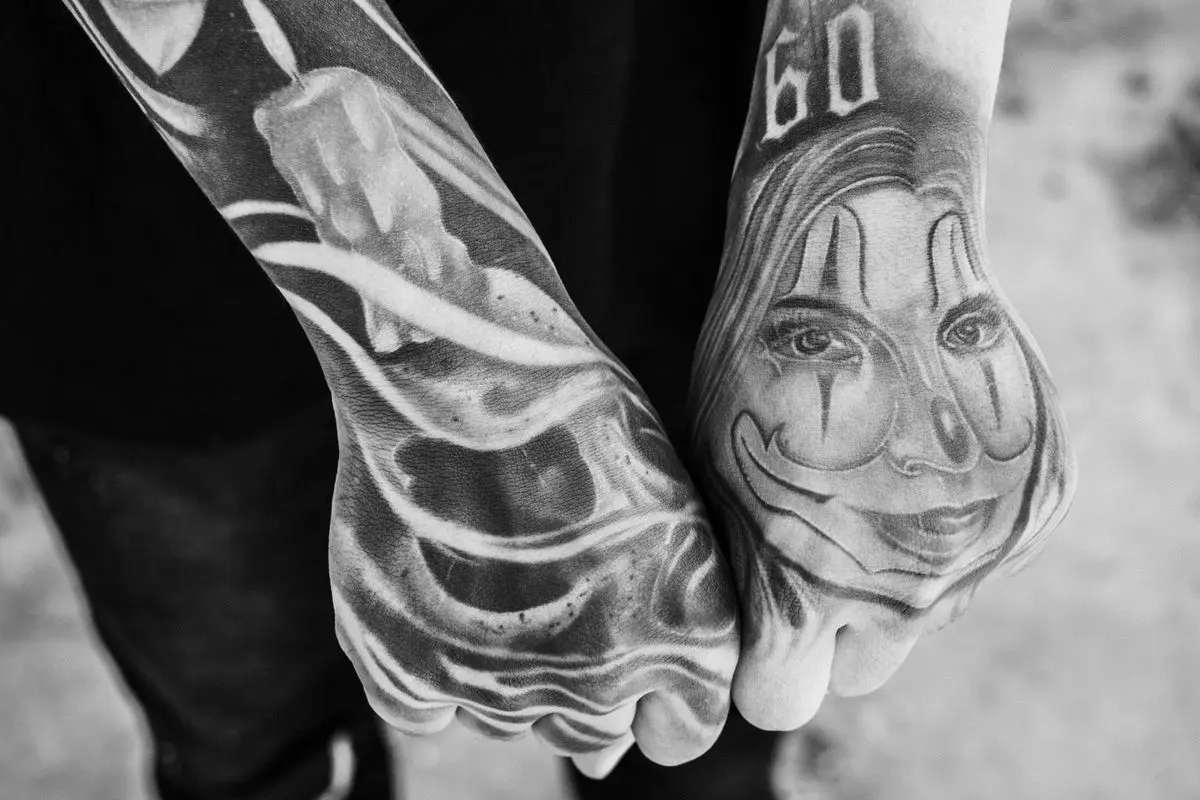
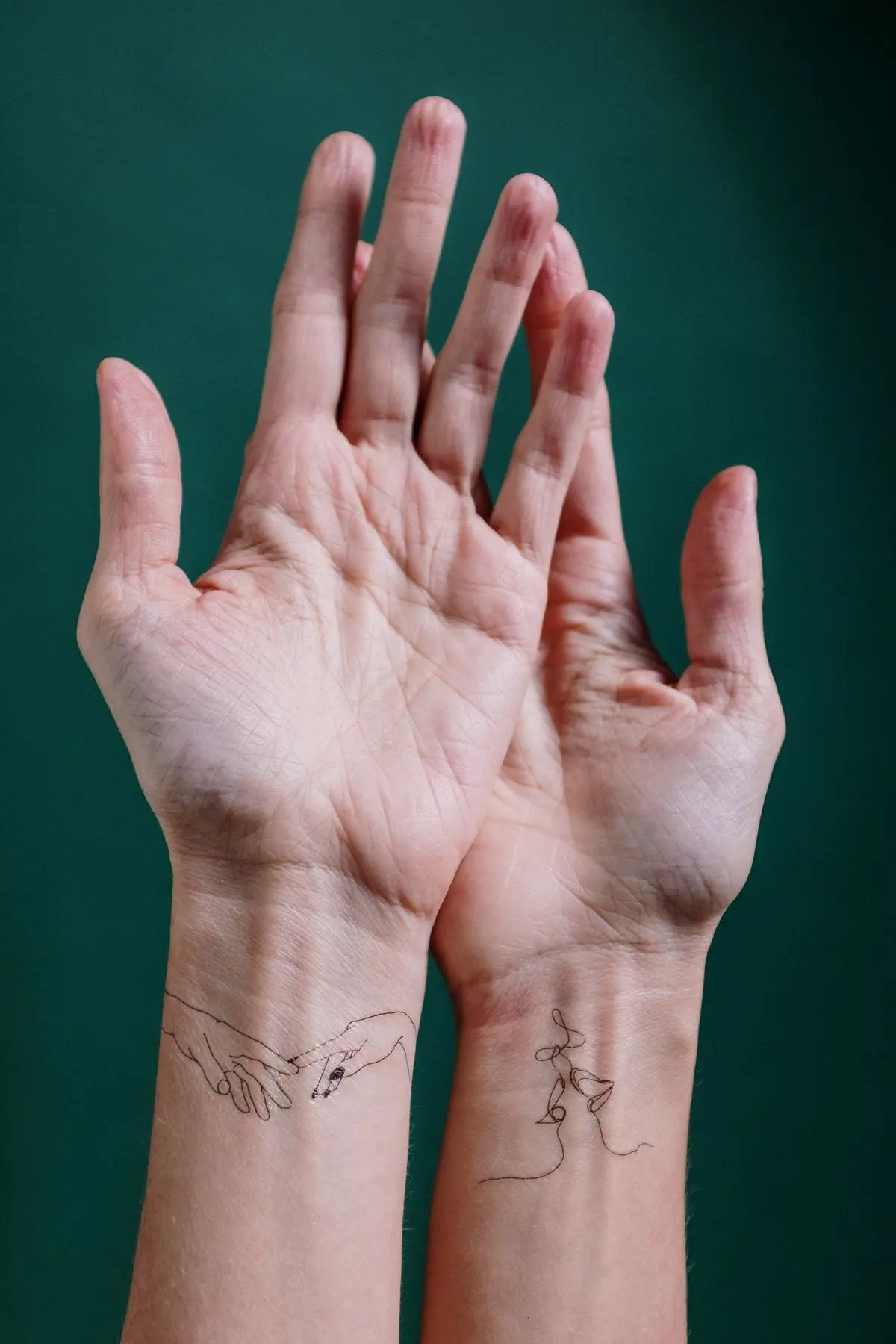
Small realistic fragments and fine text within the collage.
What the style itself demands
From the Trash Polka style guide, the rules that decide how well it lasts:
- The chaos is designed. What looks random is planned. Good Trash Polka has intentional negative space and accent placement despite its appearance of disorder.
Common questions about Trash Polka aging
Does Trash Polka age well?
The realism elements age the way any black-and-grey realism does: fading and softening over years, needing touchups at 5–10 years on most people to stay sharp. The solid black passages and smear elements hold very well; black ages better than grey. The red accents are the most unpredictable, since red ink can fade unevenly or shift slightly on some skin tones. Factor in a touchup session at the 5–7 year mark.
Placement matters as much as style
Friction and sun drive aging more than anything else. Ourplacement guide groups the body into three tiers, which are the same tiers the simulator uses:
- Low wear: outer forearm, outer upper arm, calf, outer thigh, upper back, chest.
- Medium wear: inner bicep, inner forearm, inner thigh, ribs, lower belly.
- High wear: fingers, knuckles, hands, top of foot, behind the ear.
Whatever the style, the habits that slow fading are the same: sunscreen on healed skin, a proper heal in the first weeks, and a touch-up when it needs one. Thewhy tattoos fade guide and thetouch-up guide cover both.