Tattoo Touch-Ups: Cost, Timing, How to Ask
Most reputable shops offer one free touch-up in the first 30–90 days. Here's when you need one, when to wait, and how to ask without offending your artist.
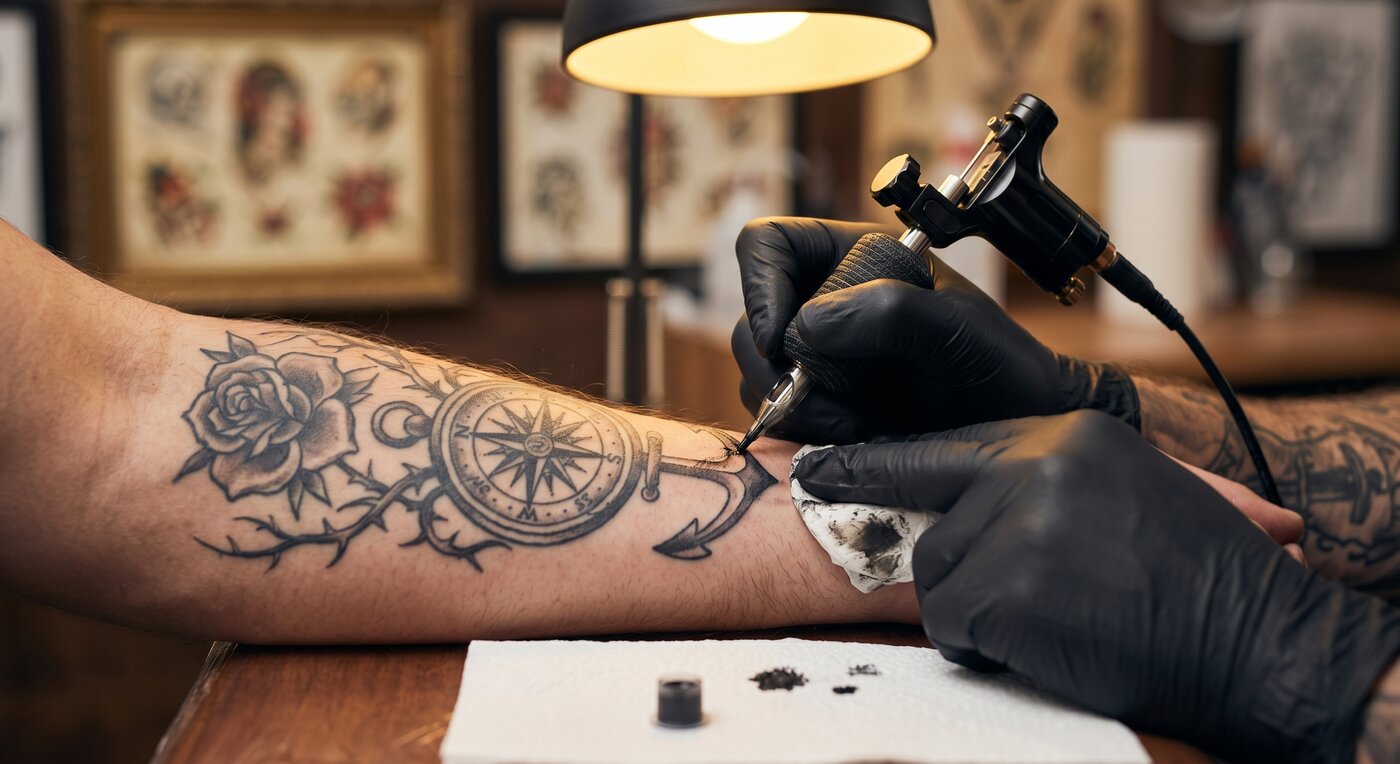
A touch-up is a short follow-up session where your artist re-saturates a spot the original session didn’t fully take, fills a gap from healing, or sharpens a line that softened. It’s a normal part of tattooing: most pros expect to do them, and most reputable shops include the first one in the original price. The hard part isn’t the touch-up itself. It’s knowing whether you actually need one, when to ask, and how to bring it up without souring the relationship with the artist.
What a touch-up is (and isn’t)
A touch-up addresses a specific issue with the existing tattoo:
- A patch where ink didn’t saturate (often called a “fall-out” spot)
- A line that healed thinner or fuzzier than it went in
- A small gap in solid black or color packing
- A spot where heavy peeling or scabbing pulled out pigment
A touch-up is not:
- A redesign or scope change
- Adding new elements to the tattoo
- A second session of a planned multi-session piece (that’s a continuation, not a touch-up)
- Reworking a tattoo done by a different artist (that’s a rework, often priced differently)
Be clear in your own head about which one you need before you reach out. Asking for a “touch-up” and showing up wanting changes is the fastest way to burn an artist’s goodwill.
When to assess (not a day before)
The number that matters: wait at least 4 weeks, ideally 6 weeks. Tattoos go through a cloudy/waxy phase from week 2 to week 4 where they look duller, patchier, and less saturated than they actually are once fully healed. Artists won’t touch up a tattoo that hasn’t finished healing, partly because they can’t accurately see what needs fixing, and partly because tattooing not-yet-healed skin causes more trauma and worse final results.
For the full healing timeline, see our tattoo healing stages guide. The short version:
- Day 0–14: Peeling, fluid, cloudy. Do not assess.
- Day 14–28: Cloudy/waxy phase. Still do not assess.
- Week 4–6: Final saturation emerges. Now you can assess.
- Week 6–8: Standard touch-up window if needed.
Most decent artists won’t even discuss touch-ups before week 4. If yours offers to touch up at week 2, that’s actually a yellow flag: it usually means the original session went badly enough that they want to fix it before you spend a few weeks staring at it.
How to know if you actually need one
At week 6, look at the tattoo in good natural light and check:
- Solid black: Is it uniformly dark, or are there visible “patches” of grey or skin showing through?
- Lines: Are they crisp and consistent in weight, or are some sections fuzzy or broken?
- Color: Is it saturated end to end, or are there spots that look washed-out compared to the rest?
- Edges: Are the boundaries between elements clean, or did color bleed where it shouldn’t?
Take photos under flat lighting and compare to the photos your artist took on day 0 (most artists post the day-of photo on Instagram or send it to you). The day-0 photo is artificially saturated because of swelling and surface ink; your healed tattoo will always look a little softer. That’s normal. What you’re looking for are actual gaps and fall-out, not “it’s slightly less intense than the day I got it.”
A small bit of patchiness is usually within normal tolerance. If you can see clear holes in the saturation from across the room, that’s a touch-up.
Industry norms for free touch-ups
Most reputable shops offer one free touch-up under specific conditions:
- Within a defined window: typically 30, 60, or 90 days from the original session
- Original aftercare followed: picking, scratching, sun exposure, or pool/hot-tub contact during healing typically voids the free touch-up
- At the same shop with the same artist: touch-ups are not transferable between artists
- For specific issues, not subjective ones: fall-out, gaps, and faded lines, yes; “I want it darker” or “I changed my mind on the color,” no
Norms vary. Some artists offer free touch-ups indefinitely on their own work. Some specifically don’t offer them on hands, fingers, feet, or rib placements where ink fall-out is partly inherent to the placement. Some require you to come in for an in-person assessment before they’ll commit.
The right time to learn an artist’s touch-up policy is at the consult, not after the fact. If you didn’t ask, the next-best time is at the original session.
What touch-ups cost outside the free window
If you’re past the free window, or if the artist doesn’t offer free touch-ups, expect:
- Shop minimum charge: most shops charge their standard minimum ($75–$200) for any touch-up, regardless of how small
- Hourly rate for longer work: extensive rework on a multi-hour piece is hourly
- Cover-up pricing if it’s old work: touch-ups on tattoos more than ~2 years old often get priced like cover-ups (1.5–2x the original-equivalent rate) because old ink has to be worked around
For overall tattoo pricing context, see our cost guide.
A common scenario: you’re 6 months out from your original session and you notice a small gap. Your artist’s free window closed at 90 days. You’ll likely pay the shop minimum for a 15-minute touch-up. Tip 20–30% as you would for any session.
How to ask without offending the artist
Tattoo artists are professionals, and a touch-up request is a normal part of their work. The way you ask still matters. Some patterns that work:
Lead with the photo, not the complaint. Send a clear, well-lit photo of the tattoo at week 6 and ask “what do you think?” rather than “this didn’t take, can you fix it?” Most artists will tell you whether they see what you’re seeing: sometimes they’ll point out it’s healing fine, and sometimes they’ll agree and book you in.
Frame it as the tattoo, not their work. “I noticed a small gap in the black on the upper left” reads very differently from “this didn’t come out right.” The tattoo is the patient. They are not on trial.
Reference their policy. “I know you mentioned a 60-day touch-up window, can I come in?” shows you remembered the conversation and aren’t trying to sneak in past the deadline.
Be flexible on scheduling. Touch-ups are short (15–45 minutes) and most artists fit them in between full sessions. They’ll appreciate flexibility on day and time.
Don’t bring it up on the same day. Asking about a touch-up while you’re still in the chair, or texting day-of, reads as not trusting the work. Wait the full 4–6 weeks.
What to avoid:
- Posting a photo on social media tagging the shop with a complaint before talking to the artist
- Contacting other artists at the shop instead of yours
- Asking for a refund (touch-ups are the remedy, not money back)
- Going to a different artist for a touch-up without trying yours first (they’ll consider you a one-time client and adjust accordingly)
Edge cases
Your original artist moved or quit. Most shops will handle the touch-up with another artist if your original isn’t reachable. Some will even waive the fee. Others won’t. Ask the shop manager directly.
You moved cities. Touch-ups are typically not transferable across shops. You can ask a new local artist, but expect to pay shop-minimum or hourly for them to work on someone else’s piece. Some artists won’t touch other artists’ work at all.
It’s been more than a year. That’s not a touch-up anymore. It’s either a refresh (same artist re-saturating an aging tattoo) or a rework. Refreshes are typically priced like a small new session. Reworks vary widely.
Healing went badly. If you scratched, picked, or had a serious infection, be honest about it. Some artists will still do the touch-up; some will charge for it; some will decline because the skin underneath has been damaged in ways that affect how the touch-up will hold. Lying about aftercare to get a free touch-up is the surest way to never work with that artist again.
The tattoo wasn’t actually finished. Some pieces are designed to be done in two or more sessions: outline first, then color or shading later. That’s not a touch-up; that’s the second session. If you’re unsure whether your piece was a one-and-done, ask.
After the touch-up
Aftercare is exactly the same as the original session; see our aftercare guide for the routine. The touched-up area will heal on the same timeline as a fresh tattoo, even though only a small section was worked. Plan on another 2–4 weeks of standard care.
Tip the same percentage you’d tip on a normal session. Even on a free touch-up, a $20–$40 cash tip is the right move: your artist is doing 30 minutes of focused work that they’re not getting paid for.
The short version
- Wait 4–6 weeks before you assess. Earlier than that, you can’t see what’s actually there.
- Most reputable shops offer one free touch-up in the first 30–90 days, with conditions.
- Outside the free window, expect shop minimum ($75–$200) at minimum.
- Lead with photos, frame it as the tattoo, not the artist’s work.
- Don’t go to a different artist before asking yours.
- Tip even on a free touch-up. It’s the right thing to do and your artist remembers.
Tattoo Balm