How Much Does a Tattoo Cost in 2026?
Real pricing by size, style, city, and artist tier, plus deposits, design fees, tipping, and the questions your artist won't answer over DM.
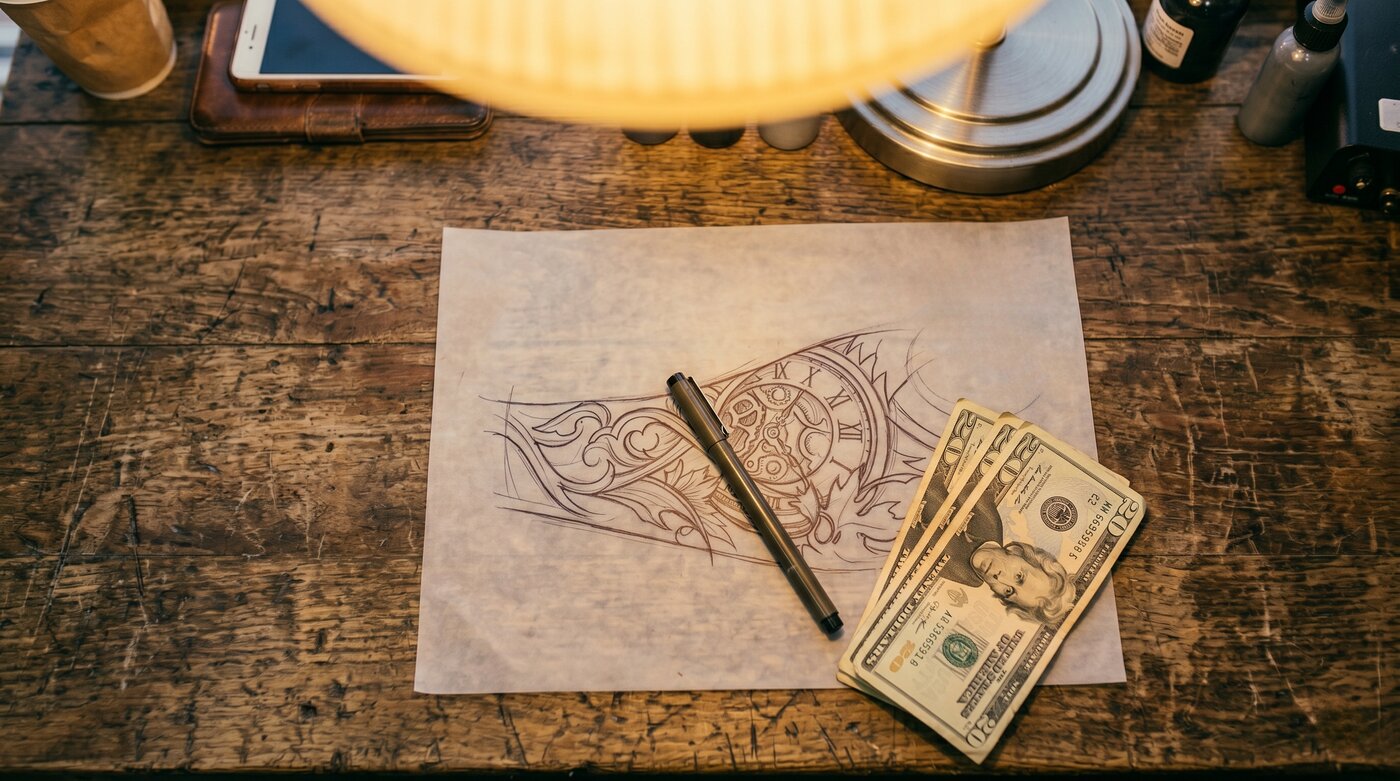
If you’ve never been tattooed, the price feels arbitrary. Two friends pay $300 for similar-looking pieces; somebody on Reddit got quoted $1,800 for a coin-size design; the price list at one shop is hourly, the next shop is flat-rate, and the third won’t quote you until the consult. None of it is random, but nobody walks you through it before your first appointment. This guide does.
We’ll cover the two pricing models, what you’ll actually pay by size, style, city, and artist tier, the fees nobody mentions until you’ve already put money down, and a tipping cheat sheet. If you’d rather skim, the tables below are the whole answer.
The two pricing models
Almost every quote you’ll get falls into one of two buckets:
Flat-rate: the artist names a single number for the whole piece. Standard for anything that finishes in under 3–4 hours: small designs, flash, simple symbols, traditional pieces. The quote already factors in their hourly rate, drawing time, and a buffer.
Hourly: the artist charges per hour of needle-on-skin time. Standard for anything over half a day: large pieces, sleeves, back pieces, custom work where the time-to-finish is hard to predict. Some shops charge a flat half-day or full-day rate (typically $800–$1,500/day) as a hybrid.
Whichever model your artist uses, almost every shop also has a shop minimum, typically $100–$200, that applies regardless of how small the tattoo is. A pencil-eraser dot on your wrist is still going to cost the minimum, because the time to set up, break down, and sterilize is the same either way.
Cost by size
These are 2026 US baselines for a mid-tier custom artist ($180–$220/hr). Adjust up or down for region and tier (see below).
| Size | Typical time | Flat-rate range | Notes |
|---|---|---|---|
| Tiny (under 1”) | 15–30 min | $100–$200 | Almost always shop minimum |
| Small (1–2”) | 30–60 min | $150–$350 | Single needle / fine line sits here |
| Medium (2–5”) | 1–3 hrs | $300–$900 | Most forearm, calf, shoulder pieces |
| Large (5–8”) | 3–6 hrs | $700–$1,800 | Half-sleeve start, thigh pieces, back-of-shoulder |
| Full sleeve | 15–40 hrs over 3–8 sessions | $2,500–$8,000+ | Highly style-dependent, see below |
| Back piece | 30–80 hrs over 6–15 sessions | $5,000–$20,000+ | Multi-year commitment for most people |
Two things to internalize before you go shopping:
- The piece almost always costs more than you think. First-timers anchor on what a friend paid five years ago in a different city. Quote inflation since 2019 has been 30–50%, based on artist rate surveys and aggregated booking data from major shop directories, the same economic pressures (commercial rents, supply costs, post-pandemic demand) that hit other skilled trades hit tattooing in the same window.
- A tattoo finished in one sitting feels cheap; a tattoo split across three sittings feels expensive, even when the total is the same. Budget for the project, not the session. See how long does a tattoo take for session-length expectations.
Cost by style
Style drives price more than most first-timers expect, because different styles need radically different amounts of needle time per square inch. A solid-black blackwork panel takes hours of fill; a fine line version of the same shape might take 40 minutes.
| Style | Typical hourly | Notes |
|---|---|---|
| American Traditional | $150–$250/hr · flash $100–$400 flat | Cheapest for what you get: bold lines, fast to execute, holds up forever |
| Fine Line | $150–$300/hr · small pieces $150–$500 flat | Looks cheap, isn’t: requires single-needle specialists |
| Micro / Minimalist | $150–$300 flat per piece | Shop minimum often applies; almost never hourly |
| Geometric | $180–$280/hr | Long sessions; precision pricing |
| Neo-Traditional | $180–$300/hr | Color packing time pushes hours up |
| Blackwork | $180–$300/hr | Solid-fill time = hours; large pieces add up fast |
| Watercolor | $180–$300/hr | Specialist-only; fewer artists, premium pricing |
| Black & Grey | $200–$350/hr | Realism-adjacent; smoothing/shading is slow |
| Chicano | $200–$350/hr | Specialist scene; premium for top names |
| Japanese (Irezumi) | $200–$350/hr · full sleeves $3,500–$10,000+ | Large-piece specialty; expect a multi-session commitment |
| Realism | $200–$400/hr | Highest per-hour rate; portraits run highest in the category |
When somebody says “tattoos cost $X per hour” without naming a style, they’re either generalizing or selling you something.
Cost by city
Regional cost-of-living dictates rent, which dictates shop overhead, which dictates rates. Same artist, same tattoo, different city: easily 30% spread. These are mid-tier hourly ranges for an established custom artist, not a celebrity-tier name:
| Market tier | Example cities | Typical mid-tier hourly |
|---|---|---|
| Premium-metro | NYC, LA, SF, Miami, Honolulu | $250–$400/hr |
| Major-metro | Chicago, Boston, Seattle, DC, Austin, Denver, Portland | $200–$300/hr |
| Mid-tier | Nashville, Atlanta, Phoenix, Minneapolis, Charlotte, Raleigh | $150–$225/hr |
| Smaller-metro & regional | Most state capitals, college towns, secondary markets | $120–$200/hr |
| Rural / small town | Outside metro areas | $80–$150/hr, but talent pool thins fast |
The premium-metro markup is real, but so is the talent density. NYC and LA aren’t more expensive because the shops are greedy; they’re more expensive because the best artists in the world have queues there. If you’re getting a portrait realism piece, the $400/hr LA specialist will often produce a tattoo the $150/hr local artist can’t, no matter how many sessions they put in.
A common arbitrage move: book a guest spot with a touring artist when they’re working out of a shop in your mid-tier city. You get premium-name execution at the host shop’s regional baseline.
Cost by artist tier
The single biggest swing in price isn’t size or style: it’s who’s holding the needle. Five tiers to know:
| Tier | Typical hourly | How to tell |
|---|---|---|
| Apprentice | $50–$120/hr | Working under a mentor, limited portfolio, supervised |
| Journeyman | $120–$180/hr | 2–5 yrs in, full book, generalist |
| Established / shop-named | $180–$300/hr | 5+ yrs, recognizable style, books out 1–3 months |
| Convention-circuit / award winner | $300–$500/hr | Travels, wins awards, books 6–12 months out |
| Celebrity-tier | $500–$1,500/hr + booking fee | Dr. Woo, JonBoy, Nikko Hurtado tier, waitlists in years |
How to tell which tier you’re talking to without asking: search their Instagram tag count, check whether they teach seminars at conventions, and look at booking turnaround on their site. An artist with 100k+ followers booked six months out is not a journeyman, regardless of their rate.
How to choose a tattoo artist covers vetting in detail: portfolio review, hygiene, consult red flags.
The fees nobody mentions
Hourly or flat rate is the headline number. Here’s what gets added:
- Design / drawing fee: $50–$300, sometimes folded into the deposit, sometimes separate. Custom designs that involve multiple revisions can push higher.
- Deposit: almost universal. Typically $100–$500, applied to the final session’s total. Non-refundable if you cancel inside 48–72 hrs or no-show.
- Cancellation / reschedule fee: many artists forfeit your deposit on the first reschedule, full deposit + a new deposit on the second.
- Touch-up policy: most reputable shops include one free touch-up in the first 30–90 days. Outside that window, expect $50–$200 minimum. See tattoo touch-ups for what’s reasonable to ask for.
- Rush / off-hours: booking inside 1–2 weeks or a Sunday/late-night slot can add 15–30%.
- Consultation fee: uncommon, but some celebrity-tier artists charge $100–$250 just to meet.
- Cover-up surcharge: covering an existing tattoo usually runs 1.5–2x the cost of a fresh piece the same size, because the artist has to design around what’s already there.
Add it all up and a “$600 piece” is realistically $800–$950 out the door once deposit, design fee, and tip are in.
What drives the price up or down
Same artist, same hourly rate: these are the levers that move the final number.
- Detail density: micro-detail per square inch is what costs you, not the overall dimensions. A 3” hyper-detailed compass takes longer than a 5” bold-traditional anchor.
- Color vs. black: color packing is slow; every pigment change is setup time. Black-and-grey is faster per square inch.
- Custom vs. flash: flash (pre-drawn designs you pick off a wall or sheet) skips drawing time. Most artists discount flash by 20–40%.
- Body location: ribs, sternum, inner upper arm, feet, hands, and necks tattoo more slowly because of skin texture and your tolerance for staying still. Same design on a forearm vs. a rib will diverge in hours. See the pain chart by body location for how this maps to session length.
- Your skin: fair, dry, and previously sun-damaged skin can take longer to saturate. Heavily scarred areas often need two passes.
Tipping: the real numbers
Standard US tattoo tip in 2026 is 20–25% of the artist’s take, cash preferred. On a $600 session that’s $120–$150.
A few common-sense exceptions:
- Round up, not down. $80 tip on a $370 session is fine. Don’t haggle on the tip.
- Shop owner who tattooed you: varies by region. In most US shops, you still tip; the owner can choose to redirect it. When in doubt, tip.
- First session of a multi-session project: tip each session, not just the final one. Artists eat consistently, not just on completion day.
- Guest artists: tip the artist directly in cash. Don’t put it on the shop’s card.
The full breakdown is in how to tip your tattoo artist, including Venmo etiquette and what to do when the shop adds a card fee.
Don’t do these things
- Don’t negotiate the rate. Tattoo artists work on tight margins after the shop’s cut (typically 30–50%). Haggling reads as disrespect and will get you politely walked out, or worse, accepted by an artist who’ll hurry the work to make the math.
- Don’t pick the cheapest quote. Laser removal of a single bad forearm piece runs $3,000–$6,000 across 6–10 sessions (per removal clinic pricing data and the cost breakdown in our tattoo removal guide). The “savings” from a $200 artist vs. a $600 artist evaporate the first time you have to fix the cheap one.
- Don’t skip the deposit. Artists who don’t require a deposit are usually filling cancellation slots. That’s fine for flash, less fine for a multi-hour custom piece.
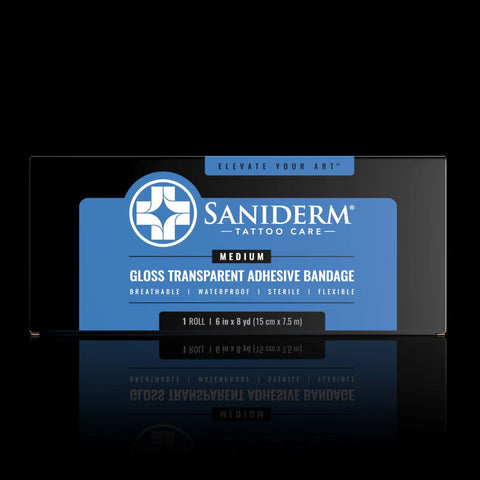
- Don’t forget the aftercare budget. Plan $20–$60 on top of the tattoo for decent aftercare and second-skin bandage if you’re going that route.
Budgeting your first tattoo: a worked example
Let’s price a realistic first-tattoo scenario: a 4” custom forearm piece, black-and-grey, mid-tier artist in a major-metro market.
- Quoted at 3 hours × $220/hr = $660
- Custom design fee = $75
- Deposit (already paid, credited to total) = $150 (no add to final)
- Tip at 22% on the $735 artist take = $162
- Aftercare supplies = $30
- Out the door: ~$925
That number is what to budget for any meaningful first piece in a major-metro market in 2026. If a shop is quoting you $300 all-in for the same scope, something is being skipped: quality, hygiene, or the artist’s tier.
For a step-by-step on the rest of the process (consult, deposit, day-of, aftercare), see the first tattoo checklist.
FAQ
Is $X per hour worth it? Per-hour rate only tells you the artist’s tier. The real question is portfolio quality vs. price. A $300/hr artist whose healed work looks as good as their fresh work is cheaper than a $150/hr artist whose lines blow out by year three. Look at 1–3 year healed photos before you compare rates.
Should I haggle on the price? No. Tattoo pricing isn’t a flea market. If a rate is outside your budget, ask the artist if there’s a smaller scope that works (drop a color, simplify a section, shrink the size); that’s a conversation about scope, not price. Most artists will work with you on scope.
Why is my quote so much more than my friend’s? Three possibilities: different style (realism vs. traditional is a 2x swing), different artist tier, or different city. Quotes from 2019–2022 are also outdated: the market has moved 30–50% since.
Do artists charge by the hour or by the piece? Both. Small and medium pieces (under 3 hours) are usually flat-rate; anything longer is usually hourly or day-rate. Some artists do everything hourly; some do everything flat. Ask at consult.
What’s a fair deposit? $100–$500 depending on session length. Non-refundable for late cancellations is industry standard, so don’t take this personally. The deposit is credited to your final session total, so you’re not actually paying extra, you’re paying earlier.
Can I split a tattoo across multiple sessions to spread the cost? Yes, sleeves, back pieces, and large thigh pieces are almost always split across 3–8 sessions over months or years. You pay per session as you go. Make sure you can finish what you start; abandoned half-done pieces are hard to hand off to a different artist.
Are convention prices cheaper than shop prices? Sometimes. Many convention artists offer pre-drawn flash sheets at fixed prices that are 20–40% under their shop rate. Custom work at conventions is usually at the artist’s normal hourly. Convention slots also often skip the deposit.
Why was I told no quote until the consult? Custom pieces are hard to quote sight-unseen because total time depends on the final design. Reputable artists won’t quote off a vague Instagram DM; that’s a feature, not friction. Expect a 15–30 min consult before you get a real number.
Should the price include touch-ups? Most reputable shops include one free touch-up in the first 30–90 days. Confirm at consult; don’t assume. Touch-ups outside that window typically cost $50–$200. Full breakdown in the touch-up guide.
The one-line answer
A real first tattoo from a real artist in a US city in 2026 is going to land between $300 and $1,500 all-in, with most first-timers ending up at $600–$1,000. Anything cheaper than that range is a quality risk. Anything more expensive than that range is buying you a tier of artist that most first-timers don’t need yet.
Spend the money once. The cheapest version of “good” is much cheaper than the most expensive version of “bad.”
Adhesive Bandage Roll (4" × 8 yd)