

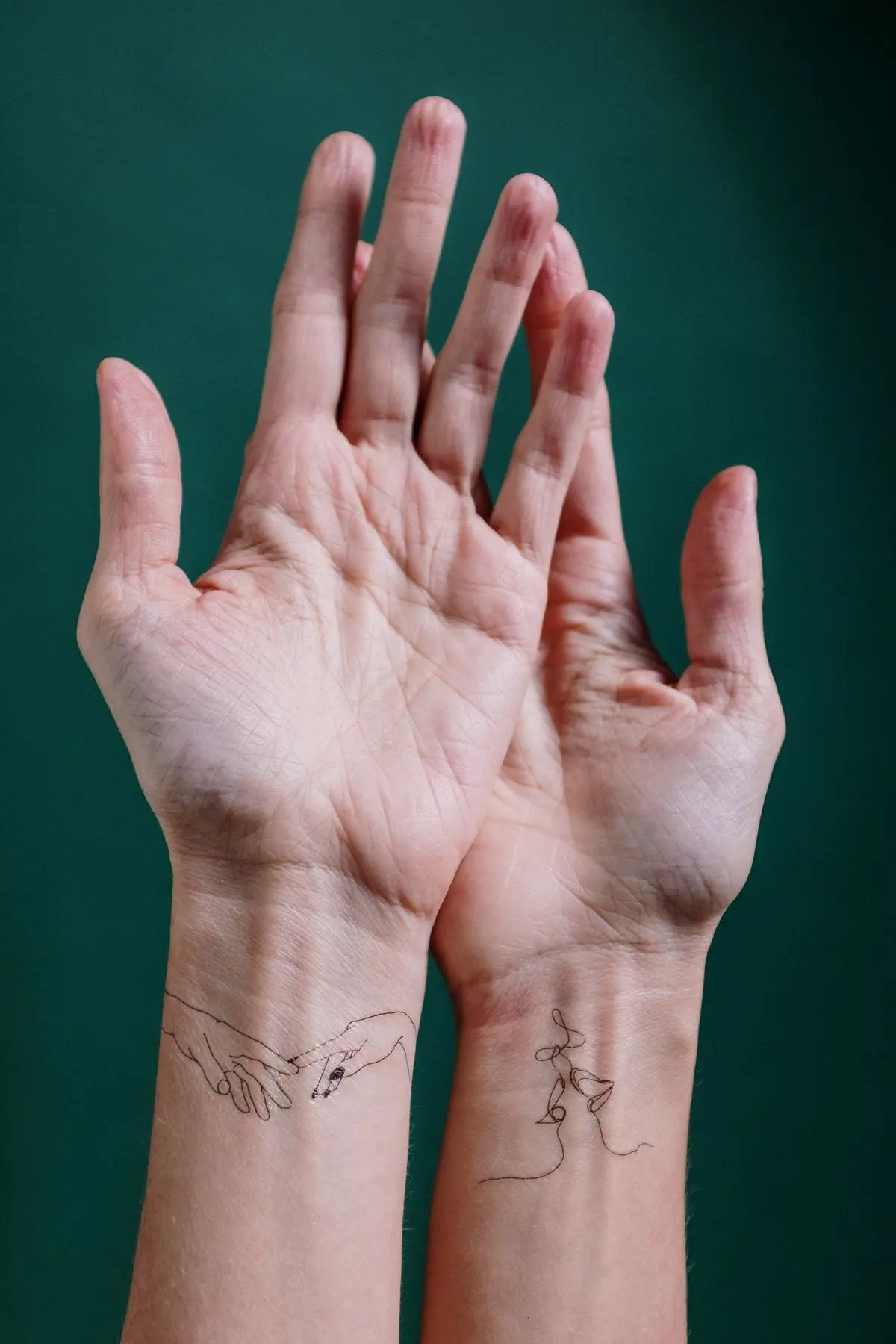
What is the difference between Stick-and-Poke and Fine Line tattoos?
Fine line is single-needle work done with a tattoo machine: hairline strokes that look like they were drawn with a technical pen, built on negative space, with minimal or very light shading. It took off on Instagram in the 2010s and is now a stand-alone style for botanicals, minimalist portraits and personal script.
Stick-and-poke (handpoke) applies ink by hand with a single needle. The look is intentionally simple and a little imperfect: dotty shading, thin or slightly irregular lines, small symbols and lettering. It carries DIY and punk heritage, and a skilled professional can produce work as clean and permanent as a machine tattoo, often with a softer, more drawn character.
The honest difference is risk. Handpoke is the style most associated with kitchen-table tattoos, and non-sterile needles, shared ink and no bloodborne-pathogen training are how people get infections or a blowout that scars. Only get handpoked by a professional using single-use sterile needles, fresh ink and gloves in a clean, licensed setting.
How do you tell Stick-and-Poke and Fine Line apart?
Look at the line. A uniform, hairline stroke with machine consistency is fine line. Dotty shading and slightly irregular, hand-drawn lines are stick-and-poke. If you cannot tell, ask the artist how it was done.
| Attribute | Stick-and-Poke | Fine Line |
|---|---|---|
| Origin | Ancient hand-tap roots · modern DIY/punk revival | LA / Instagram · 2010s |
| Typical price | $80–$200 flat for small pieces · pro artists may bill $100–$180/hr | $150–$300/hr · small pieces $150–$500 flat |
| Core palette | Black | Black, Cool grey |
| Best for | People who love small, simple, hand-drawn-looking pieces | Small, delicate, personal pieces |
| Skip it if | You want it done by a friend or in a non-sterile setting: don't | You want the tattoo on fingers, feet, or heavy-wear areas |
| Watch as it ages | Who does it. Experienced hand-poke artists get much more consistent results. | Placement. Keep fine line off hands, fingers and feet if you want it crisp. |
Does Stick-and-Poke or Fine Line age better?
Fine line fades faster than bold-line styles. It puts the least ink in the skin of any common style, so there is little margin before lines read as soft, and sun and placement make a big difference. A well-placed fine-line piece on low-friction skin should hold clearly for roughly 3 to 6 years, while fingers, palms and feet can degrade within 12 to 18 months. Handpoke can heal patchy and fade unevenly, and simple, bold-enough designs from an experienced hand hold up, so the artist matters a lot.
Run a design in each style from healed to 20 years, by size, placement and sun.
An illustrative model, not a prediction.
Does Stick-and-Poke or Fine Line cost more?
Fine line runs $150–$300/hr, with small pieces $150–$500 flat. Stick-and-poke is $80–$200 flat for small pieces, and professional artists may bill $100–$180/hr.
Prices vary a lot by city and artist; how much a tattoo costs breaks down what drives them.
Which should you get?
- You love the hand-drawn, DIY look and its imperfection
- You want lettering, minimal symbols or dotty shading
- You can find a licensed professional who uses sterile single-use needles
- You want precise, delicate botanicals, script or minimalist linework
- You want machine-level line consistency
- You will look at several artists’ healed work before booking
Can you combine Stick-and-Poke and Fine Line?
They sit well together, since both are mostly black, light-handed work with plenty of skin showing. Keep either off high-friction spots and out of the sun if you want it crisp.
Whichever you lean toward, pick the artist before the design: look for healed work in that style, not just fresh photos. How to choose a tattoo artist has the checklist, and what tattoo style should I get helps if you are still deciding between more than two.