What is the difference between Realism and Black & Grey tattoos?
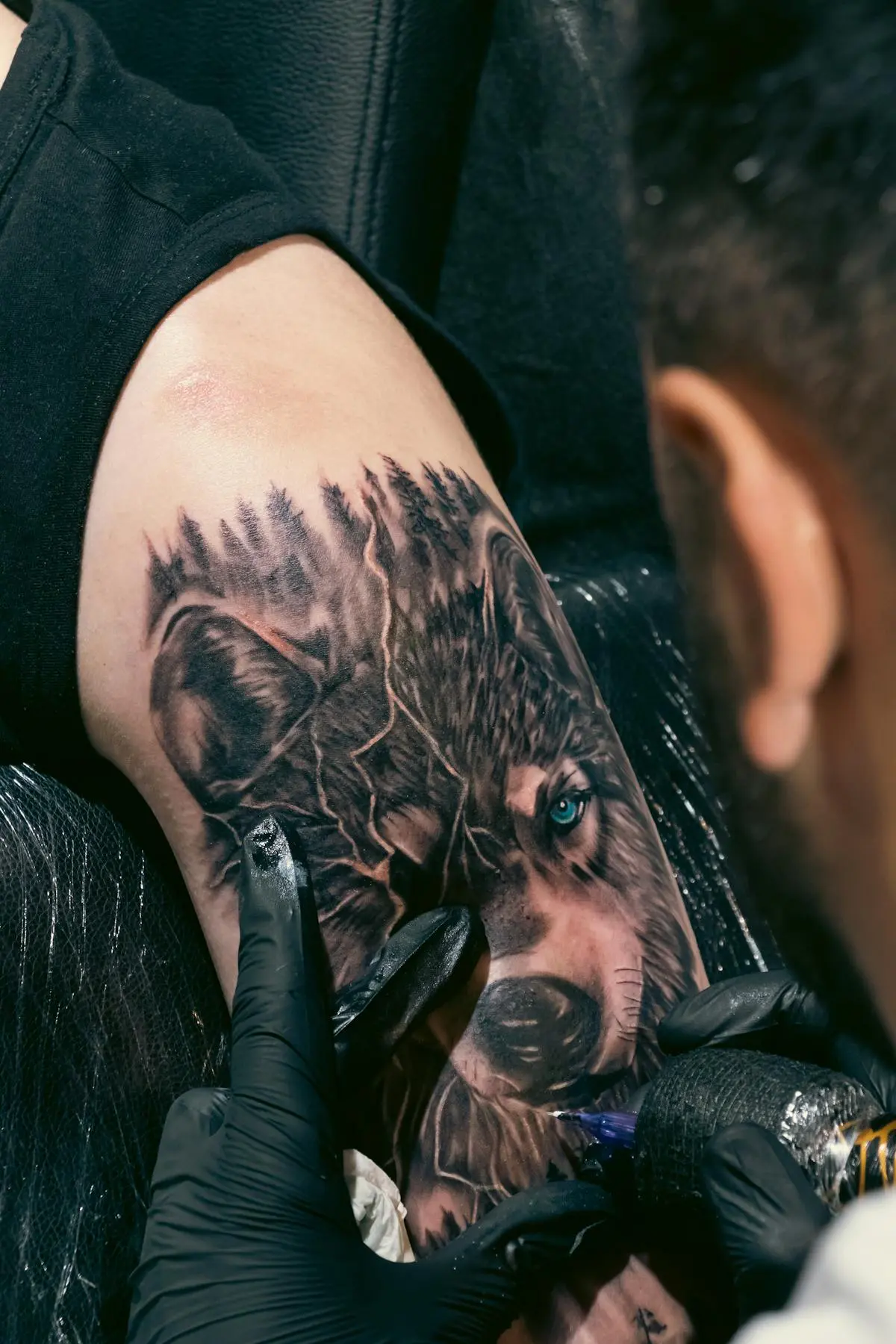
Realism uses no outlines and no stylization: every edge is a value transition, translated from a specific reference image. It has split into two largely separate specialties, black-and-grey realism and color realism, which adds accurate hue matching on top of correct values. An artist who excels at one may not excel at the other, so review portfolios separately.
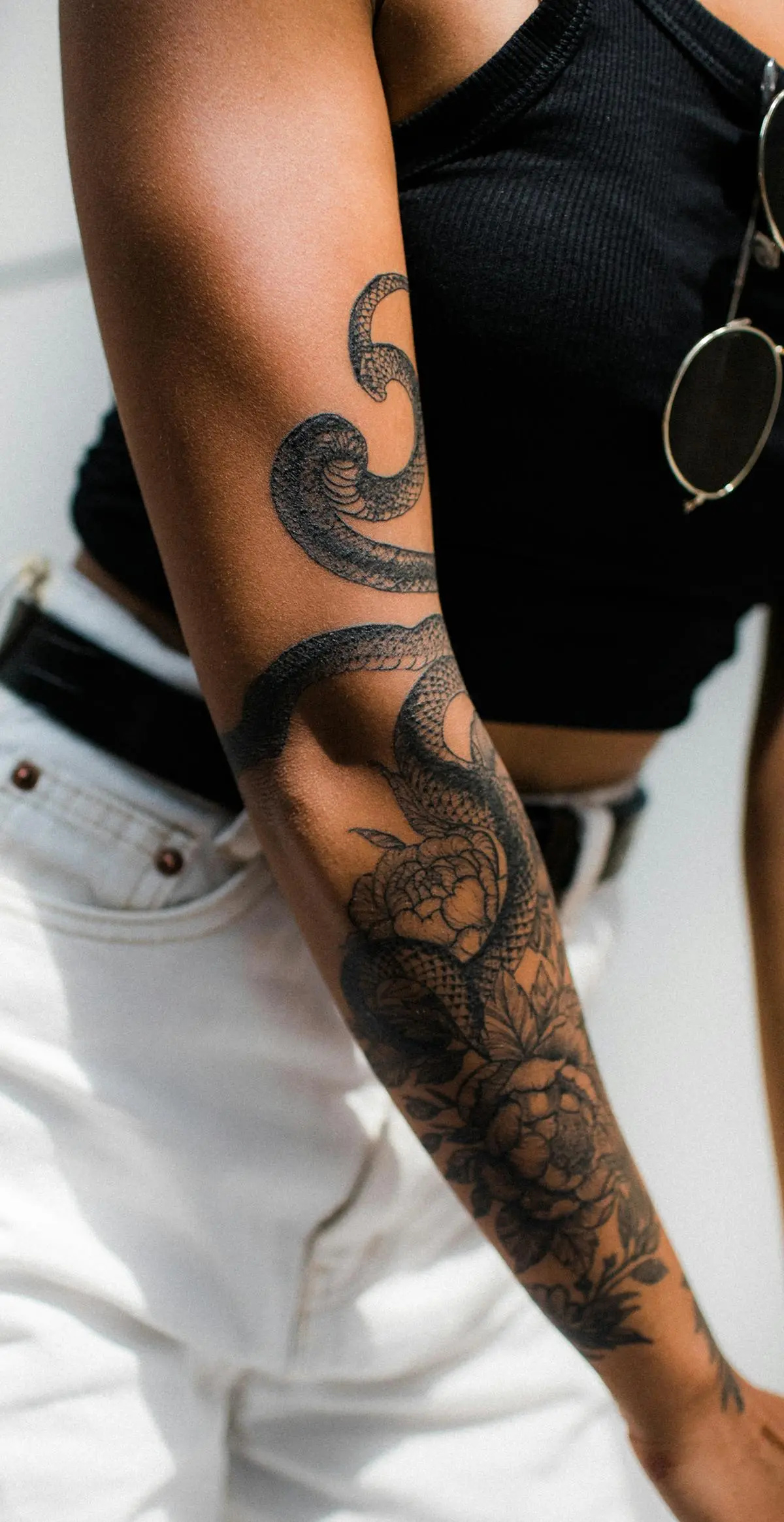
Black-and-grey is defined by its materials: a single black pigment diluted into grey wash, with the skin as the highlight. It can carry realism, but also Chicano work, illustrative pieces, script, florals and abstract designs.
How do you tell Realism and Black & Grey apart?
Ask two questions. Is there color? Then it is not black-and-grey. Does it look like a photo, with no outlines? Then it is realism. A grey-wash portrait with no lines is both; a grey-wash floral with outlines is black-and-grey but not realism.
| Attribute | Realism | Black & Grey |
|---|---|---|
| Origin | USA · 1970s, matured 1990s | 1970s California prison tattooing |
| Typical price | $200–$400/hr | $200–$350/hr |
| Core palette | Full spectrum (color realism), Black and grey (B&G realism) | Black, Dark grey, Mid grey, Light grey |
| Best for | Portraits, pets, single-subject pieces | Portraits, religious imagery, fine art references |
| Skip it if | You want crisp longevity with zero touchups | You want bold high-contrast like American Traditional |
| Watch as it ages | Contrast. Ask to see healed realism from your artist several years out. | Value range. Strong blacks anchor the design as the light greys soften. |
Does Realism or Black & Grey age better?
Black-and-grey ages predictably: values compress toward grey, and the image usually still reads. Color realism can shift hues unevenly as different pigments break down at different rates, which can change a portrait’s likeness, and it needs touch-ups more often. Either way, realism needs size and contrast. Done small or low-contrast, it is the worst-aging work in tattooing.
Run a design in each style from healed to 20 years, by size, placement and sun.
An illustrative model, not a prediction.
Does Realism or Black & Grey cost more?
Realism specialists typically bill $200–$400/hr, often in sessions of six hours or more. Black-and-grey runs $200–$350/hr.
Prices vary a lot by city and artist; how much a tattoo costs breaks down what drives them.
Which should you get?
- You want a photographic portrait, pet or single subject
- You will accept a touch-up every 5 to 8 years
- You are going large: palm-sized and up
- You want shading and depth without necessarily a photo look
- Longevity matters more to you than color
- You are planning a sleeve or back piece in one consistent tone
Can you combine Realism and Black & Grey?
Most portraits are done as black-and-grey realism, for accuracy and longevity. Color portraits are striking but raise both the difficulty and the long-term maintenance.
Whichever you lean toward, pick the artist before the design: look for healed work in that style, not just fresh photos. How to choose a tattoo artist has the checklist, and what tattoo style should I get helps if you are still deciding between more than two.