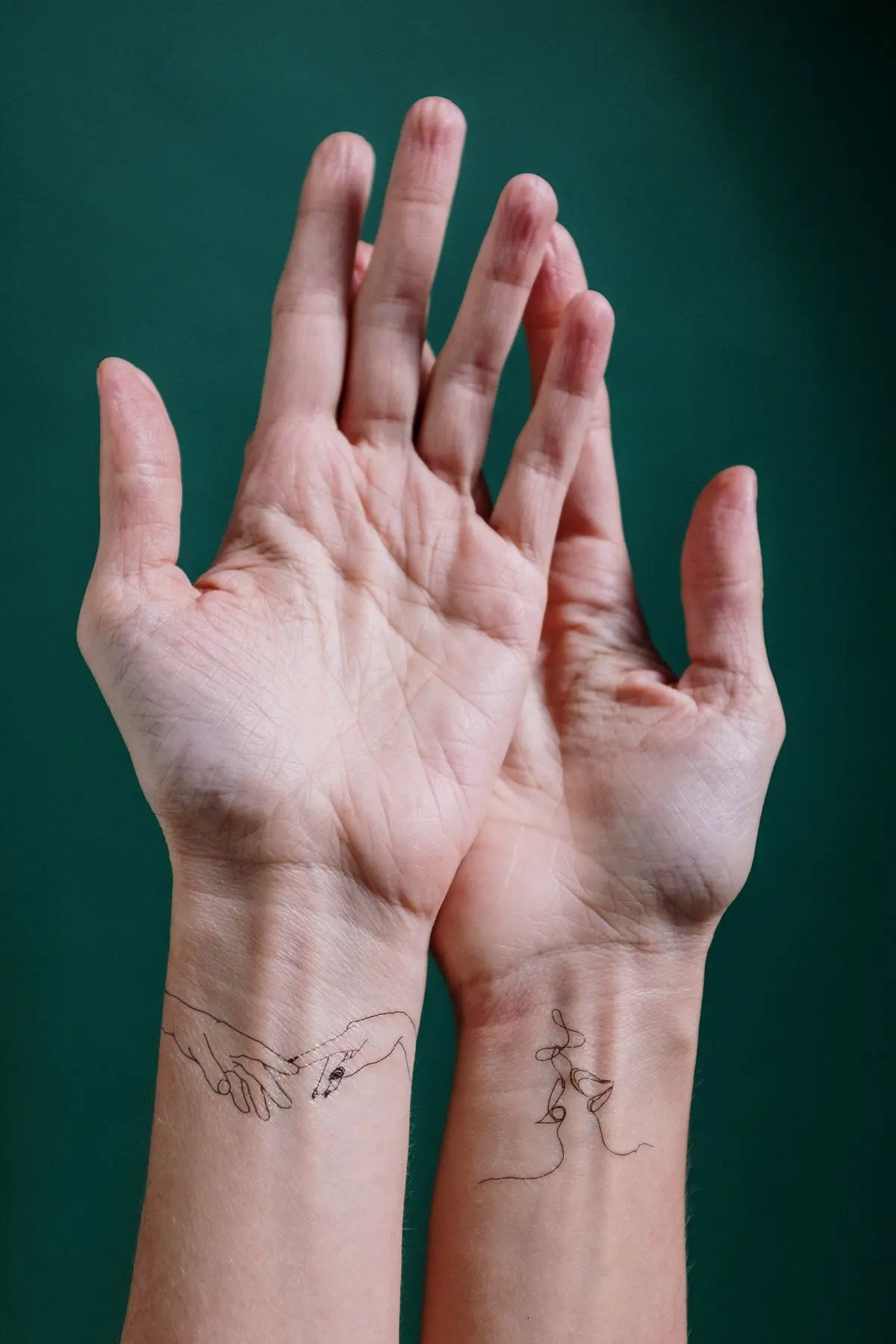
Fine line tattooing, single-needle work at its purest, looks like something drawn with a 0.3mm technical pen. Lines so precise and thin they seem impossible for skin to hold. That's the appeal and the problem simultaneously. The style exploded on Instagram around 2012–2015, driven by artists like Dr. Woo and JonBoy working in Los Angeles, who demonstrated that a tattoo machine could produce work that looked more like jeweler's engraving than traditional flash. The approach was genuinely new: prior to the social media era, fine single-needle work existed mainly in chicano tattooing, where it developed as a constraint of limited prison resources rather than an aesthetic choice. What contemporary fine-line turned it into was a stand-alone style aimed at delicate botanical pieces, minimalist portraiture, and personal script. The technical demand is higher than it looks. Single needles deposit less ink per pass, which means the artist must build saturation through technique and precision rather than sheer needle pressure: too light and the ink won't set, too heavy and the skin blows out and lines spread. Placement also matters more here than in almost any other style: fingers, palms, feet, and the inner wrist are high-friction, high-movement zones where fine line degrades to illegibility within two years regardless of the artist's skill. The sweet spots are areas with minimal sun exposure and movement, such as the sternum, upper back, outer forearm, and ribs, where well-executed fine line can hold beautifully for five or more years before any refresh is warranted.
Pick this style if...
- Small, delicate, personal pieces
- Inner arm, forearm, back, shoulder placements
- Script, botanicals, minimalist linework
Skip this style if...
- You want the tattoo on fingers, feet, or heavy-wear areas
- You want high-contrast, bold visual weight
- You're unwilling to see multiple artists before picking one
Notable artists
A starting point. Follow their work, don't just book the first DM-slot you can get.
- Dr. Woo
- JonBoy
- Mr. K
The rules of the style
- Single needle or fine round liner only: the defining constraint. No thick outlines, no bold fills. Everything is built from hairline strokes.
- Minimal or no shading. Where shading exists, it's achieved through density of fine lines or very light grey wash, never heavy black packing.
- Negative space is the design. Fine line work relies on what isn't there. Overcrowding kills the aesthetic.
- Scale discipline: fine line tattoos must be sized correctly for their complexity. Too small and the detail closes up within years. Most experienced fine-line artists will upsize your concept.
- Placement matters more than other styles. Fine line on high-movement or high-friction areas (fingers, inner wrist, feet) fades significantly faster. Artists should advise on this upfront.
- Touch-ups are expected: this is the only style where scheduling a touch-up at 3–6 months is standard practice, not a sign of a bad tattoo.
Color palette
- Black
- Cool grey
- Warm grey (secondary)
- Sepia tone (secondary)
Color fine-line work exists but fades faster than black. If adding color, stick to muted tones, since saturated color fights the delicacy of the linework.
Aftercare for this style
Fine Line follows the same basic fresh-tattoo routine as other styles: follow your artist's instructions, keep the area clean, and protect the healed tattoo from UV exposure.