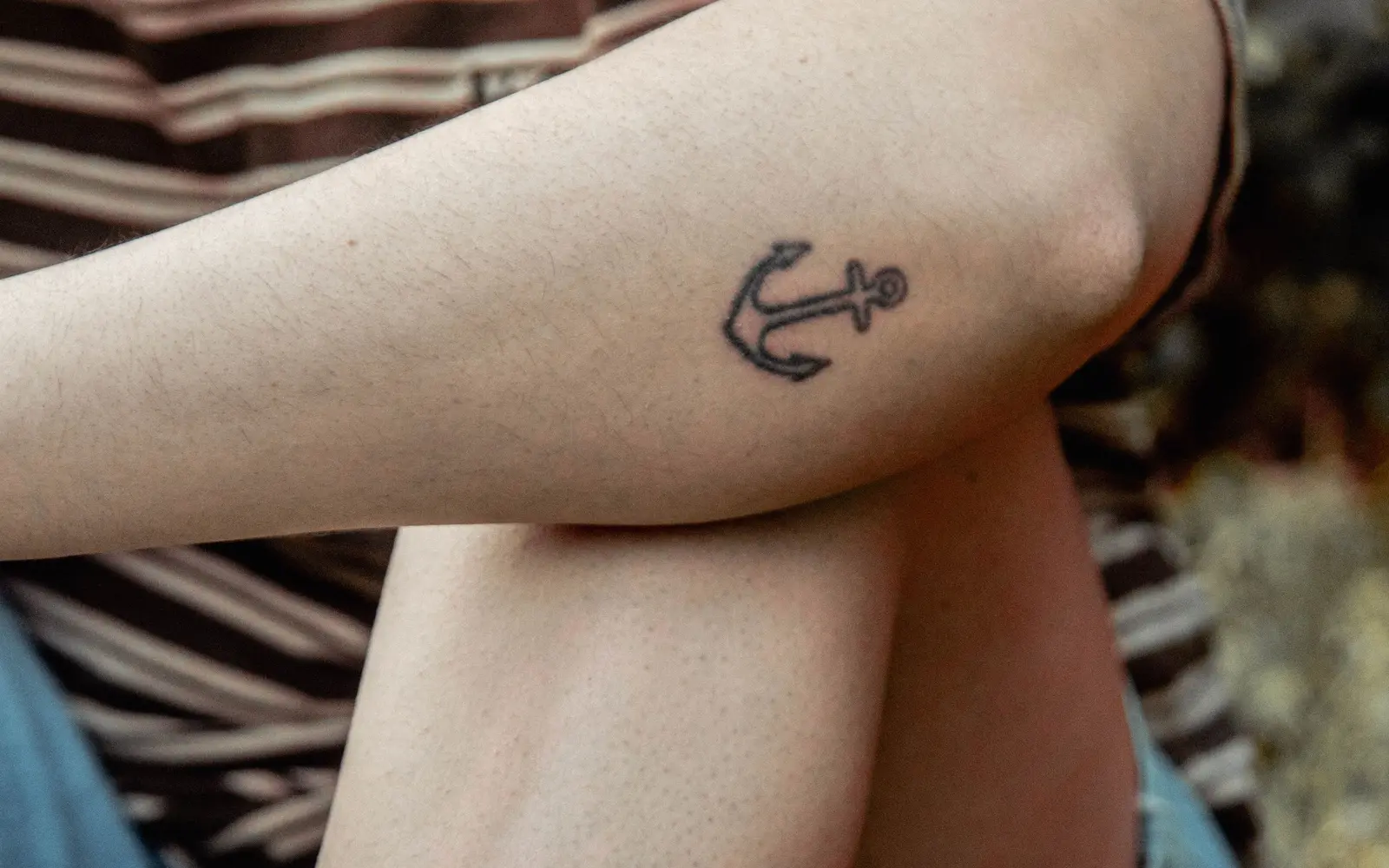
Minimalist tattoos strip a subject down to its fewest possible marks: a single continuous line, a tiny clean symbol, a shape held in open space. People confuse it with fine line, but the two aren't the same thing: fine line is about needle weight, minimalism is about how little you put on the skin. Done right, it reads instantly and ages cleanly because there's almost nothing to blur. The risk is the opposite of most styles, though: get the composition or placement wrong and there's nowhere to hide it. What kills minimalist tattoos is not the style itself but the gap between what looks clean in a reference image and what survives on moving, textured skin. A single line that looks effortless on paper needs enough mass to not blur into nothing over a decade. Size, placement, and line weight are not aesthetic calls; they're longevity decisions. Ask to see healed work from the specific placement you want, not just fresh studio photos from a similar spot. Price structure runs different from larger work. Most minimalist pieces are quoted flat by the piece rather than hourly, typically $80–$300 depending on complexity, placement, and the artist's rate. If a studio is offering two-for-one minimalist tattoos at a walk-in event, that's not efficiency, it's a sign they're not thinking carefully about the long-term outcome of each mark on your specific skin.
Pick this style if...
- First tattoos and people who want something subtle
- Single-line figures, small symbols, simple botanicals
- Forearm, ribs, ankle, and other flat, low-friction spots
Skip this style if...
- You want detail, depth, or a 'wow' centerpiece
- You like to fill the space and keep adding
- You want it tiny on fingers, feet, or other high-wear skin
The rules of the style
- Subtraction is the method: you remove everything that isn't essential to the subject and keep only what makes it legible.
- Negative space is an active part of the design, not leftover background; the open skin around the mark does as much work as the ink.
- Keep the mark count low: a few clean lines or a single shape, not a densely worked illustration shrunk down.
- Consistent, confident line weight matters because there's so little ink that any wobble or break becomes the focal point.
- Size for survival, not just for cuteness: a minimalist design needs enough room that its few lines won't bleed into each other over the years.
- Restraint over decoration: resist adding dots, flourishes, or shading 'to fill it out,' since that quietly turns it into a different style.
Color palette
- Black
- Single accent color (secondary)
Most minimalist work is solid black line. A single muted accent color can work, but more than one color usually breaks the restraint that defines the style.
Aftercare for this style
Minimalist tattoos often have less traumatized surface area than dense color or blackwork, but thin lines still need protection from friction and premature flaking. Keep the area clean, do not over-moisturize a tiny piece, and avoid watches, waistbands, shoes, or jewelry rubbing the placement. Once healed, sunscreen helps reduce UV-driven fading; touch-up needs depend heavily on placement and line weight.