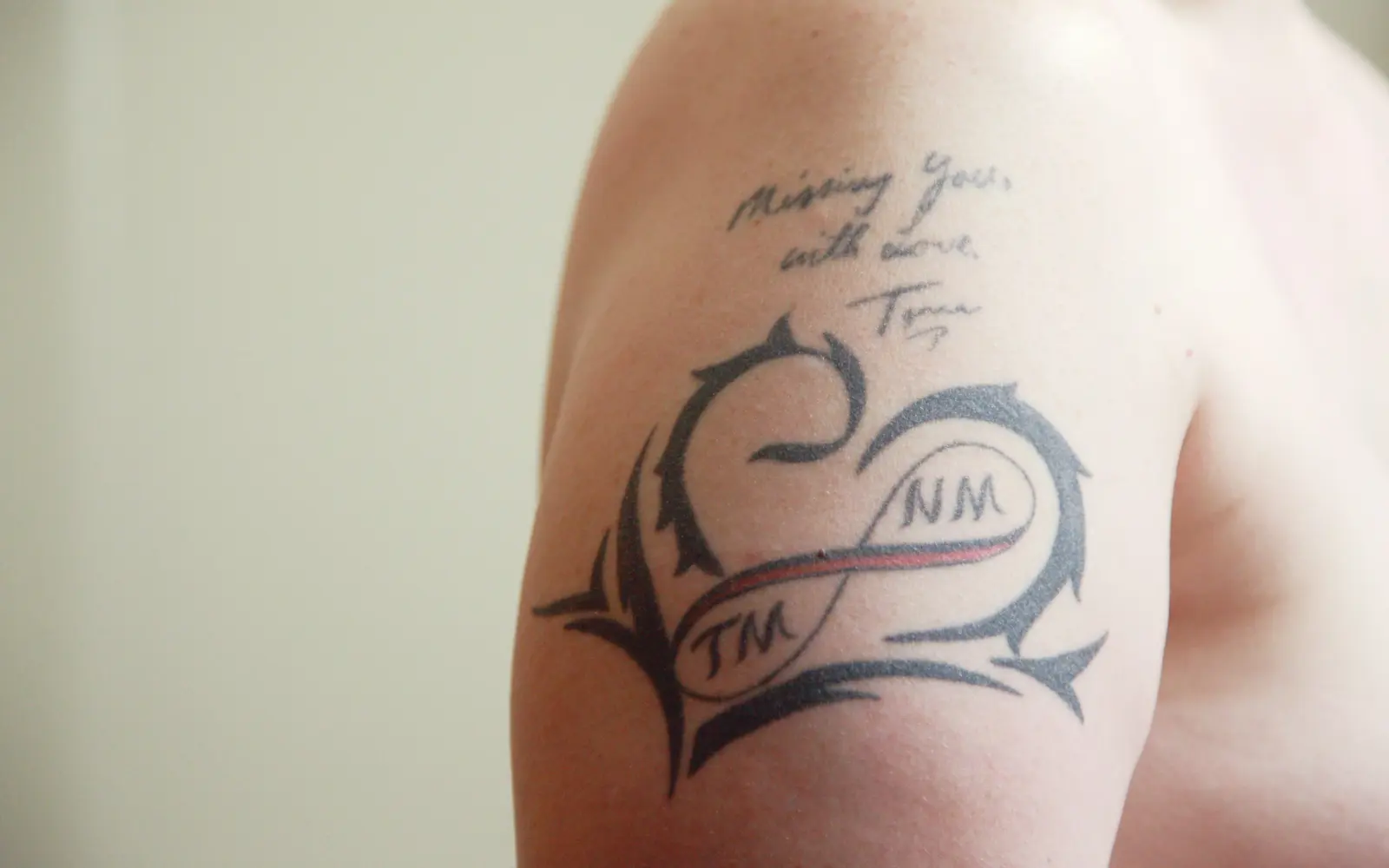
A memorial tattoo is defined by its meaning, not its look. It can be a portrait, a set of dates, a few words in someone's actual handwriting, or a quiet symbol that only you understand. Because the subject is grief and love, the stakes are higher than with any other tattoo: this isn't a piece you want to gamble on, and it isn't one to rush into the week after a loss. Take your time, choose the right specialist for what you're getting, and build something that holds up, both on the skin and emotionally, for the rest of your life. The most common memorial choices break into a handful of categories: portrait work that captures a literal likeness, handwriting or a signature lifted from a card or letter, a set of meaningful dates, fingerprints or a pawprint turned into line art, and quiet symbols (a flower, an object, a set of coordinates) that only mean something to the person wearing them. A newer option some people ask about is cremation or 'ash' ink, where a small amount of cremated remains is mixed into the tattoo pigment; not every studio offers this, the process has real hygiene and consistency requirements, and it's worth confirming an artist's specific experience with it before committing, rather than assuming any shop can do it safely. The hardest decision is usually portrait versus symbol, and it comes down to reference quality and risk tolerance. A strong, well-lit photo in the hands of a genuine portrait specialist can produce a likeness that holds up for decades. A blurry phone photo pushed through a generalist artist is how memorial portraits go wrong. And unlike other tattoo regrets, a failed portrait of someone you've lost is a uniquely painful one to live with. When the reference is weak, a symbol tied to that person almost always ages better, hurts less to look at if it's imperfect, and still carries real personal weight.
Pick this style if...
- Honoring a person, pet, or relationship you've lost
- Carrying forward handwriting, a signature, or a meaningful date
- Pairing a likeness or symbol with quiet, lasting personal meaning
Skip this style if...
- You're in the rawest weeks of grief and feel pressured to decide immediately
- You want a portrait but can't find an artist with strong healed portrait work
- You only have a single low-quality photo and won't consider a symbol instead
The rules of the style
- For a portrait, hire a true portrait specialist and judge healed work only: fresh portraits always look sharp; the test is how the likeness holds after it settles. Realism and black-and-grey artists who post healed, years-old portraits are the ones to trust with a face that has to stay recognizable.
- Use real handwriting whenever you can: a scanned signature, note, or letter in the person's own hand carries far more weight than any tattoo font. Bring the highest-resolution scan possible; the artist can clean it up while keeping every characteristic stroke.
- Choose a symbol over a forced likeness when the reference is weak: if the only photos are blurry, a meaningful object, flower, date, coordinates, or short phrase will age better and hurt less than a portrait that never quite looks like them. A symbol that's truly 'theirs' often lands harder than a face.
- Don't decide in the first weeks of grief: there's no deadline. Sit with the concept, the placement, and the artist choice for a while. The tattoo will mean more when it comes from a settled decision, not an acute moment.
- Place it where you want to carry them: close and visible (forearm, inner arm, wrist) if you want it near you daily, or private (ribs, chest, upper arm) if it's just for you. There's no wrong answer, only what feels right to live with.
- Black-and-grey ages best for the long haul: most memorial work leans black-and-grey precisely because it stays crisp and timeless. Add color only where it genuinely matters, knowing it will soften faster than black.
Color palette
- Black
- Full grey-wash range
- Soft single-color accents (a flower, a flag, a favorite color) (secondary)
Memorial pieces are overwhelmingly black-and-grey for timeless longevity. Color is best used sparingly, as a single meaningful accent rather than a full palette.
Aftercare for this style
Memorial pieces are usually black-and-grey portrait or fine detail work, which heals differently than bold flash. Expect more pinpoint scabbing across shaded areas and a longer dull, cloudy-looking phase (sometimes two to three weeks) before the true depth and contrast settle in; this is normal and not a sign the portrait 'didn't take.' Because the emotional stakes are high, resist the urge to judge the piece during this phase. Follow the artist's aftercare exactly, avoid direct sun until fully healed, and plan on a touch-up appointment 6–8 weeks out: most portrait specialists build this in, and it's routine rather than a sign anything went wrong.