How Long Does a Tattoo Take?
Honest session-length estimates for everything from small flash to full back pieces, plus what actually slows things down at the chair.
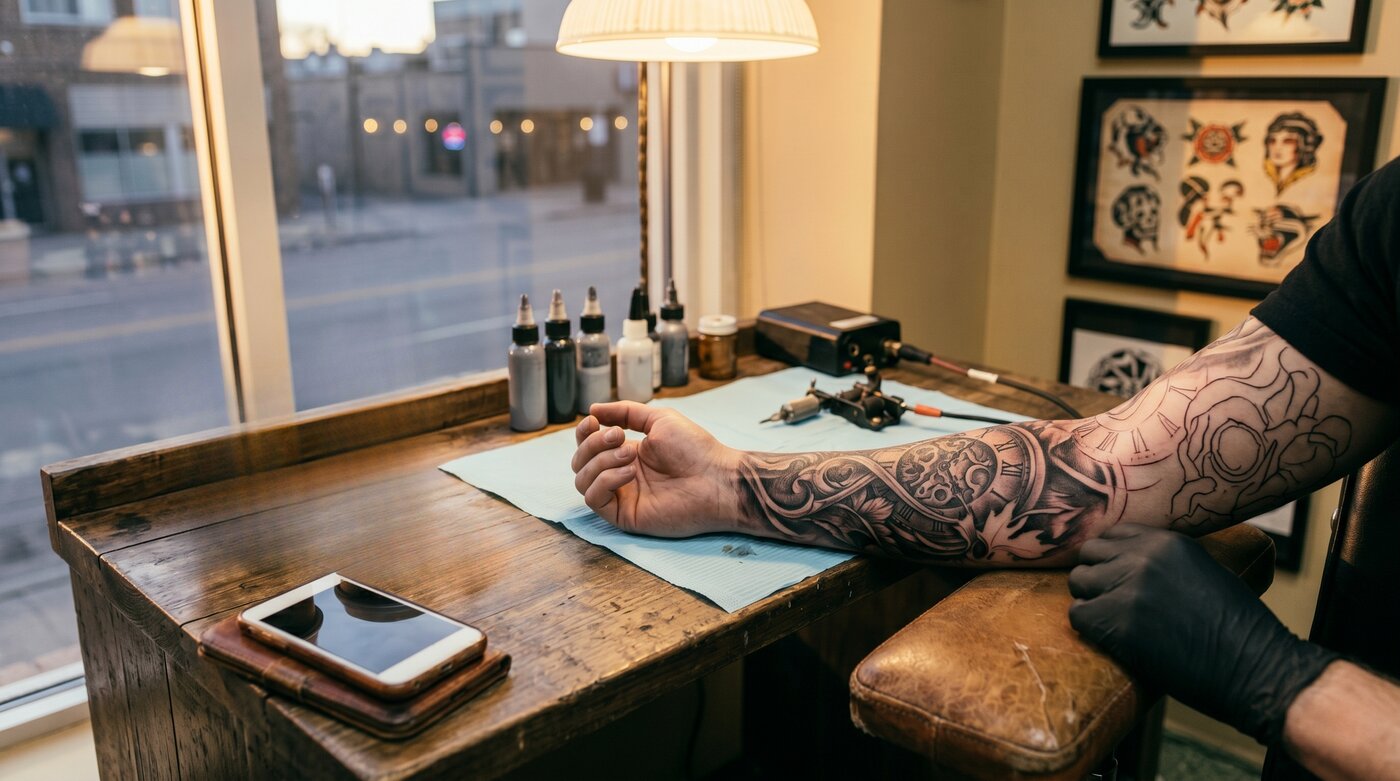
Most online estimates for tattoo time are wishful thinking. A “small” piece is rarely 30 minutes once setup, stencil placement, and breaks are counted. Here’s what a real chair time looks like, and how to plan around it.
By size
Time-in-chair, including setup and stencil. Cleaning and aftercare wrap-up usually add another 10–15 minutes per session.
| Size | Example | Typical Time |
|---|---|---|
| Tiny (under 2 inches) | date, single symbol, small word | 30–90 min |
| Small (2–4 inches) | small bird, rose, simple lettering | 1–3 hours |
| Medium (4–6 inches) | sleeve filler, small portrait, mandala | 2–5 hours |
| Large (6+ inches, standalone) | half back, large portrait, ornamental panel | 4–8 hours |
| Half sleeve | elbow-to-wrist or shoulder-to-elbow | 10–20 hours total |
| Full sleeve | shoulder-to-wrist | 25–50 hours total |
| Full back piece | shoulders to lower back | 40–80 hours total |
Anything past about 4 hours is almost always split across multiple sessions. Sleeves and back pieces typically run 4–10 sessions over several months, sometimes a year for fully custom work.
By style
Time per square inch varies more than people expect. Two pieces the same size in different styles can take very different amounts of chair time.
| Style | Speed | Why |
|---|---|---|
| Traditional flash | Fast | Bold lines, practiced designs, efficient color palette |
| Blackwork (solid fill) | Medium | Large solid-black areas pack fast, but high saturation needs passes |
| Japanese traditional | Medium-slow | Dense color, large compositions, lots of background work |
| Geometric | Slow | Precision is the whole point; small errors are obvious |
| Realism / portraits | Very slow | Color blending and detail layering eat hours |
| Fine-line / micro | Slow | Single-needle work, every line matters |
Realism and fine-line are the two styles most likely to blow past your booked time. Plan accordingly when you book, and don’t pressure your artist to rush. A rushed portrait reads as a bad portrait for the next 30 years.
By placement
Some spots are physically harder to tattoo, which slows the artist down regardless of size.
- Slow: ribs, sternum, inner bicep, hands, feet, neck, armpit. Skin moves, the angle is awkward, and pain forces breaks.
- Medium: thighs, back, chest, lower legs.
- Fast: outer arm, outer calf, forearm: flat surfaces with stable skin.
Hand and finger tattoos can take longer than expected for their size because the artist has to stretch the skin and reapply the stencil multiple times. See our pain chart by location: the painful spots are usually the slow ones too.
How long is one session?
Most artists cap individual sessions at 4–6 hours. There are real reasons for the cap:
- Artist fatigue: line quality and steadiness drop after hour four.
- Client pain tolerance: adrenaline runs out around hour three. Past that, every minute hurts more than the last.
- Skin response: extended trauma starts rejecting ink. Saturation suffers in the last hour of a long session.
Some artists will book 8-hour “death marches” if a client requests it, but the work in hour 8 is rarely as clean as the work in hour 2. Two five-hour sessions almost always beat one ten-hour session for finished quality.
What actually adds time
The estimate your artist quotes is for the tattoo itself. Real-world session time includes:
- Setup and stencil placement: 20–45 min, longer for complex pieces or repositioning.
- Custom design tweaks: if you want changes to the stencil, that’s drawing time on the clock.
- Breaks: every 60–90 min for long sessions. Add 5–15 min each.
- Color changes: pigment swaps and brush cleaning add up over a long session.
- Cover-ups: typically 1.5–2x the time of a fresh tattoo at the same size, because the existing ink has to be worked around.
If your artist quotes 4 hours, plan for 4.5–5 hours in the chair. Don’t book anything tight afterwards.
Booking math
Hours in the chair × your artist’s hourly rate = roughly your cost. See how much does a tattoo cost for current rates by tier.
Example: a 5-inch fine-line forearm piece at a mid-tier artist ($200/hr) → 3–4 hours, $600–$800 + tip. Block out a half day with no commitments after.
Multi-session planning
For sleeves, back pieces, or anything past 8 total hours, your artist will set a session schedule. Typical pattern:
- Session 1: outline + first pass, 4–6 hours.
- Sessions 2–N: shading, color, refinement, spaced 4–8 weeks apart.
- Final session: detail and clean-up, often shorter (2–3 hours).
Spacing matters. Six weeks gives the area time to fully heal before the next pass; if you push it tighter than that, the artist is working over irritated skin and the work suffers. Read our healing stages guide for what each stage feels like; large pieces hit those stages harder.
Surviving the long sessions
For anything over three hours, two things genuinely help:
- Eat real food beforehand. Blood sugar collapses around hour three and that’s when the pain ramps. A full meal 1–2 hours before the appointment is non-negotiable.
- Numbing cream, used correctly. Topical lidocaine like Zensa works for outline passes if applied 45+ minutes before the session under cling wrap. It’s less useful for shading and wears off in 60–90 minutes, so it’s a tool for the first pass, not a session-long anesthetic. Talk to your artist before using it; some won’t tattoo over numbing cream because it changes how the skin takes ink.
After a long session, a Saniderm-style bandage cuts the messiest part of the first 3–5 days of healing. Worth it for anything past about 3 hours of work.
What to ask when you book
- “How long do you think this will take?” Artists know their own pace.
- “Will we do it in one session or split it?” Set expectations so you can budget.
- “What’s the cancellation policy if we need to reschedule a session?”
If this is your first time, our first tattoo checklist covers the rest of the prep.
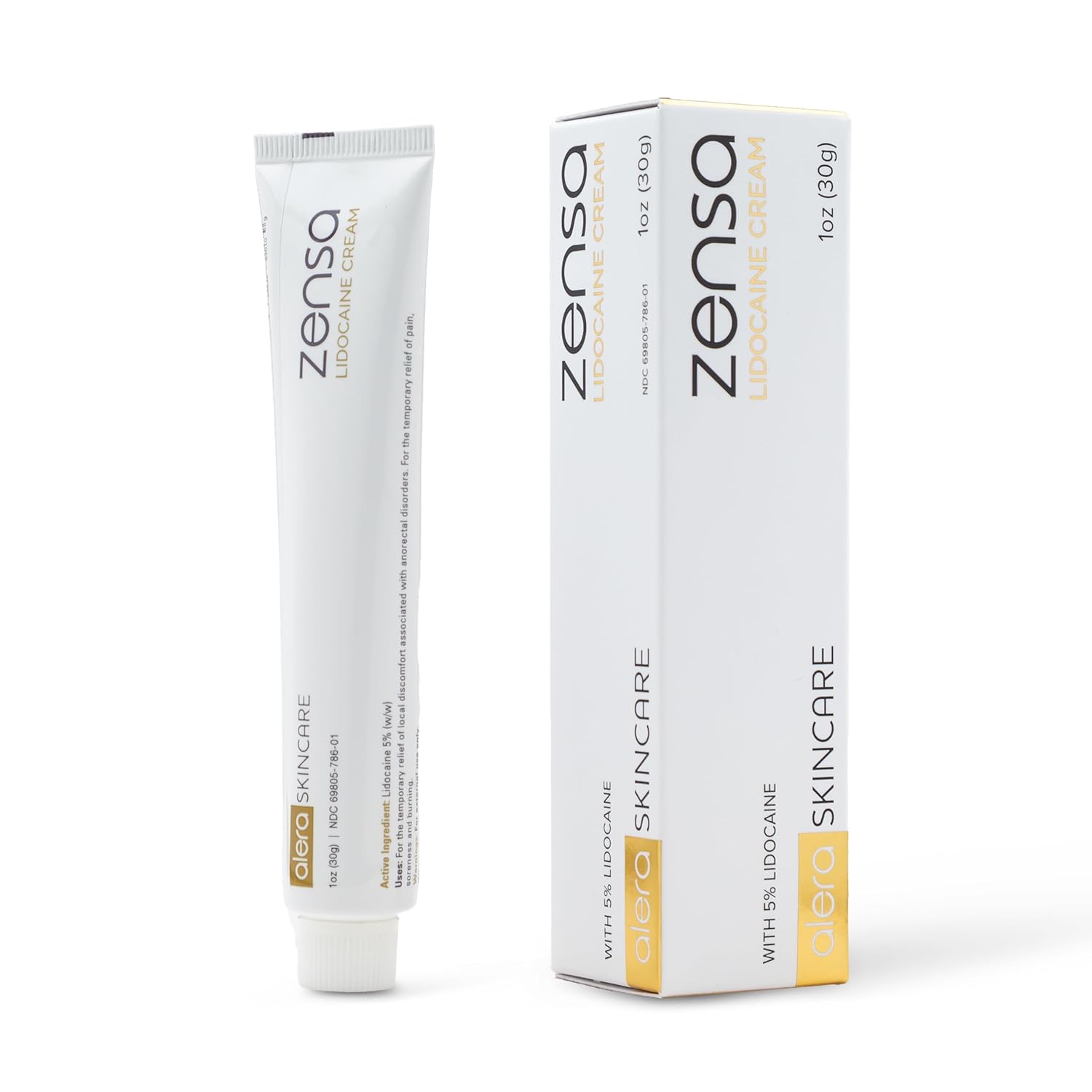
Numbing Cream 5% Lidocaine