Tattoo Infection Signs vs. Normal Healing
Redness, swelling, and oozing are normal. Green discharge, spreading red streaks, and fever are not. Here's how to tell the difference, day by day.
Most tattoo anxiety during healing is completely warranted: a fresh tattoo is an open wound, and your brain knows it. The problem is that normal healing looks alarming if you’ve never seen it before. Redness, swelling, a little ooze, tenderness: all normal. The actual signs of infection are different, and they follow a different timeline.
Here’s how to read what your skin is doing.
The American Academy of Dermatology’s tattoo-reaction guidance supports the key distinction used below: normal early redness, swelling, soreness, clear fluid, itching, and flaking should improve, while spreading redness, worsening pain, pus, fever, or chills require medical attention.
What does normal tattoo healing look like?
First 72 hours
A fresh tattoo will be red, swollen, and tender to the touch, more so near the edges than the center, since the needle passes the outline more times. Expect the skin around it to feel warm. That’s inflammation doing its job: sealing the wound and bringing in repair cells.
Clear to pale yellow fluid (plasma) will weep from the surface, especially in the first 24 hours. This is normal. It’s not pus. Rinse it off gently when you wash, blot dry with a clean paper towel, and apply a thin layer of balm. If your shop bandaged you with second-skin like Saniderm or Tegaderm, the fluid collects in a bubble under the film. That’s intentional and protective, not a problem. See Saniderm peel day by day for the full breakdown.
By hour 48–72, the redness should start shrinking toward the tattoo’s edges rather than spreading outward.
Days 3–7
Redness and swelling should be visibly decreasing by day 3. The skin will start to feel tight. A thin, translucent layer forms over the surface: this is what will eventually peel. Some people start flaking by day 5; others not until day 10. Both are normal. See is tattoo peeling normal for what the different peel types look like.
Itching often kicks in hard during this window. That’s a healing sign, not an infection sign, so resist scratching and pat instead.
Week 2 and beyond
The peeling phase finishes and the tattoo may look dull or milky. That’s the dead skin layer still sitting over the healed tattoo. It clears in another week or two. The skin might feel slightly raised over linework; that usually settles by month 2.
Full healing of the top skin layer: 2–3 weeks. Full healing through all skin layers: closer to 2–3 months. For a broader map of the whole process, see tattoo healing stages.
What does a tattoo infection actually look like?
Infection signs follow a different pattern: they get worse after the first couple of days instead of better, and they have distinct qualities that normal healing doesn’t.
Spreading redness. Normal redness is concentrated at and near the tattoo. Infected redness radiates outward: you may see red streaks extending away from the tattoo edges. This is the clearest visual sign that something’s wrong.
Heat that intensifies after day 3. Warmth is expected early. Heat that’s increasing on day 4, 5, or later, especially with spreading redness, warrants a call to a doctor.
Green or brown discharge. Plasma is clear to pale yellow. Pus is thicker, cloudier, and typically green, gray, or brown. If the discharge is opaque and discolored, it’s not plasma.
Increasing pain after day 3. A fresh tattoo hurts. It should hurt less each day. If pain is increasing rather than decreasing, especially if it’s throbbing, that’s a flag.
Fever, chills, or swollen lymph nodes. Any systemic symptoms mean the infection isn’t staying local. That’s an urgent care or ER situation, not a “watch and wait.”
Foul smell. Healthy healing has a mild, neutral smell. Infection often smells distinctly unpleasant. Trust your nose.
Infected vs. allergic reaction
These can look similar and are sometimes confused. Key differences:
An allergic reaction typically shows up as a diffuse rash, hives, or intense localized itching, often with no discharge and no increasing heat. It can appear at the tattoo site or extend into surrounding skin. Red ink is the most common culprit (it contains more organic pigments), but reactions can happen with any color. The area usually looks irritated rather than inflamed in a “wound” sense.
An infection localizes to the wound itself, has the discharge and heat pattern described above, and tends to get worse over time without treatment.
You can have both simultaneously, particularly if you scratched at an allergic rash and broke the skin. If you’re unsure, a doctor visit is the right call either way.
Second-skin specific signs
If you’re under Saniderm or Tegaderm:
- Clear or pale yellow fluid bubble: normal, leave it.
- Pink-tinged fluid: also normal, that’s diluted blood mixing with plasma.
- Green or brown fluid: not normal, remove the bandage and contact your artist or doctor.
- Rash or blistering at the bandage edges: that’s a contact allergy to the adhesive, not an infection. Remove the bandage and switch to the open-air aftercare method: wash and balm, no re-covering.
When should I see a doctor for a tattoo infection?
Call your doctor or urgent care if you notice any of the following. The FDA likewise advises contacting a health professional when a tattoo is not healing, develops a rash, or is accompanied by fever; see its tattoo safety guidance.
- Redness that’s still spreading after day 3
- Green, brown, or opaque discharge
- Increasing pain or heat after the first few days
- Fever, chills, or swollen lymph nodes
- Red streaks radiating outward from the tattoo
If you’re on the fence, err toward calling. Tattoo infections are treatable early and much harder to manage when they’ve had time to establish. A doctor can also tell you whether antibiotics are needed, and that’s not something to self-diagnose.
What to use during the healing phase
The goal is to keep the area clean and moisturized without trapping bacteria.
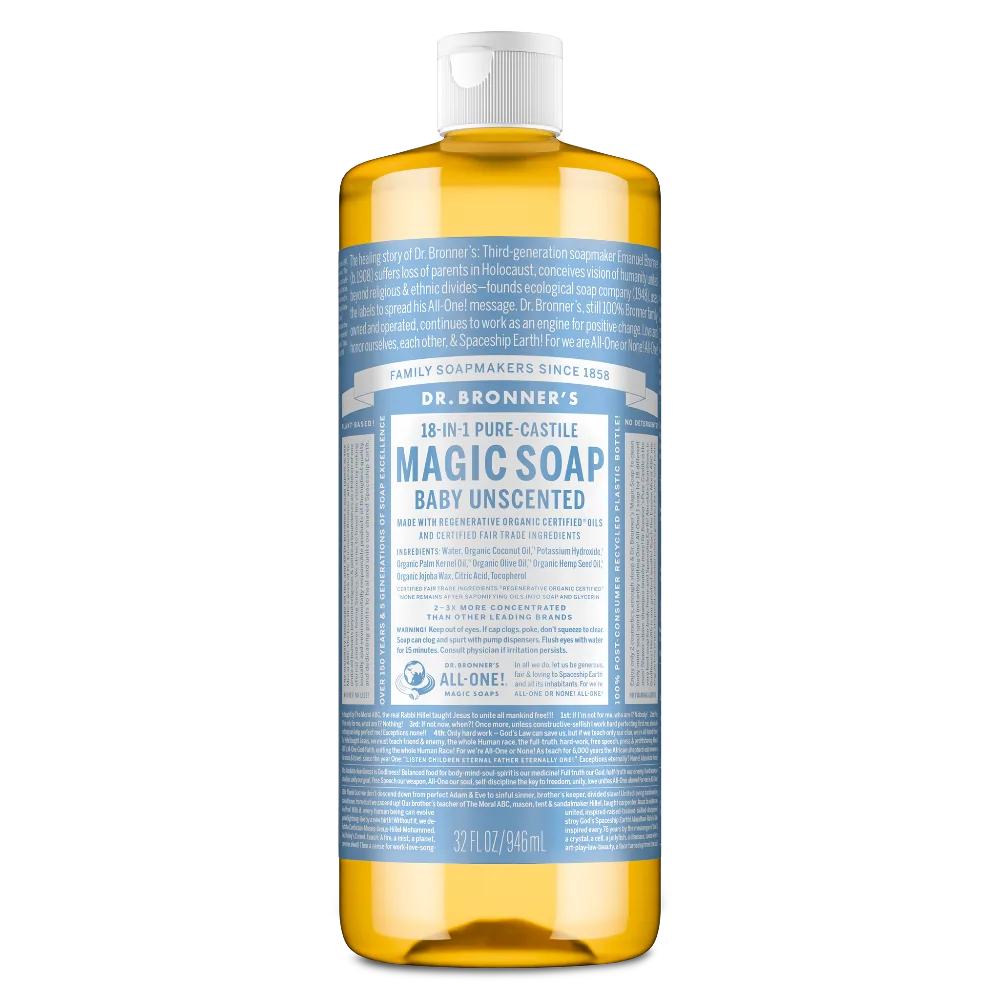
Washing: Use a fragrance-free, gentle soap. Dr. Bronner’s Unscented Castile Soap ($17.17) is the standard recommendation and what we use. It rinses clean without stripping, and there are no dyes or fragrances to aggravate healing skin. Wash 2–3 times daily, lukewarm water, gentle pressure. Pat dry.
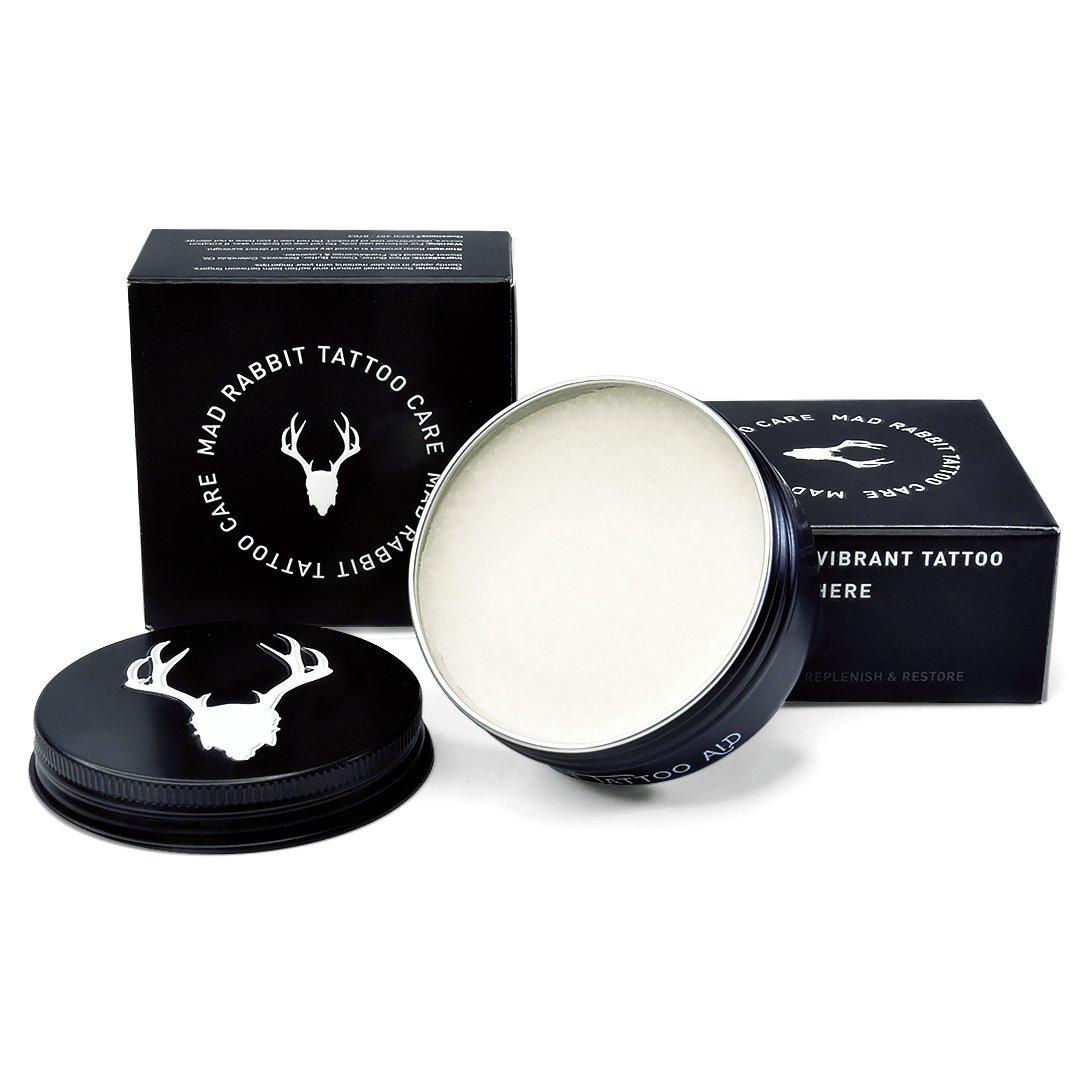
Moisturizing: Apply a thin layer after each wash. Mad Rabbit Tattoo Balm ($18.85) is our top pick for the healing phase: absorbs quickly, non-comedogenic, no fragrance. Aquaphor ($18.37) works for the first couple of days if that’s what you have on hand; keep it thin and switch to a lighter balm once the surface seals. Full aftercare breakdown: best tattoo aftercare.
The full routine (wash, pat dry, thin balm layer) takes about 90 seconds and is the most effective infection prevention available.
Tattoo Balm