Saniderm vs Tegaderm: Which Is Worth It?
Saniderm is the brand. Tegaderm is the origin. We compared adhesive strength, stretch, and price, and what actually matters fresh out of the chair.
| Product | Rating | Price | Get it |
|---|---|---|---|
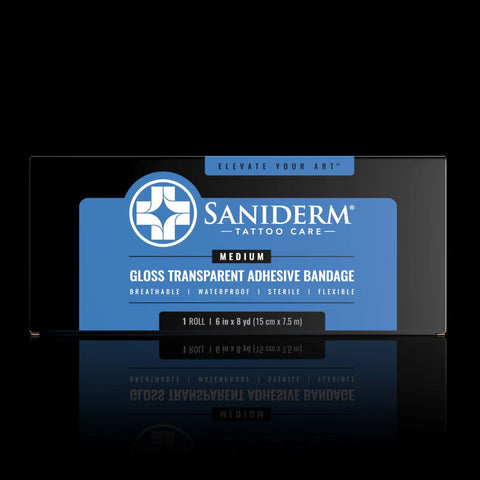
Saniderm Adhesive Bandage Roll (4" × 8 yd)Our pick The industry-standard second-skin bandage. What your artist probably used, but cheaper by the roll. | ★ 4.6 17,413 reviews | $39.95 | |
3M Tegaderm Transparent Film Dressing Roll (4" × 11 yd) The medical-grade film that Saniderm is based on. Sold in hospital supply quantities, usually cheaper per square inch. | ★ 4.5 3,331 reviews | $34.64 |
Ratings and review counts reflect Amazon customer aggregates (last verified 2026-05-16). Prices change; check the live listing. We may earn a commission.
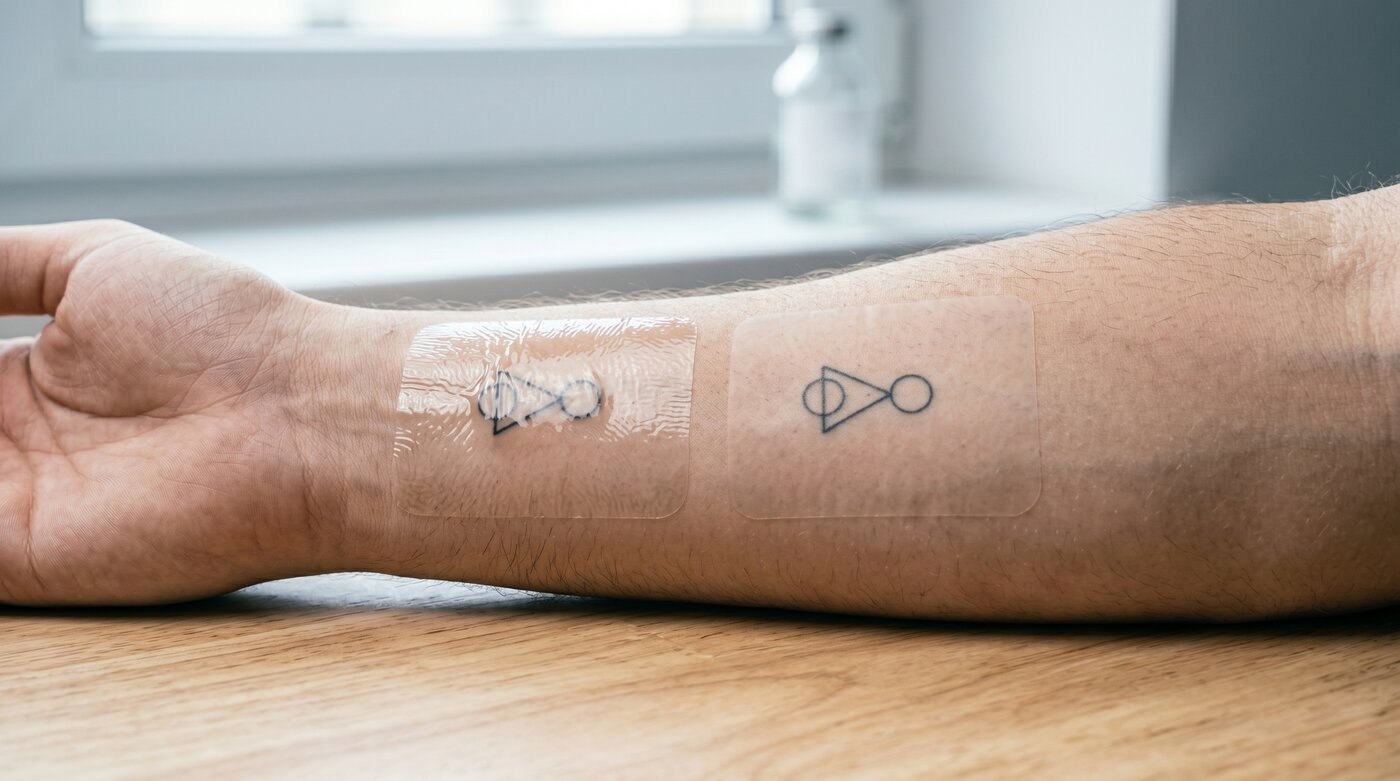
Here’s the thing most tattoo forums won’t tell you: Saniderm is based directly on 3M Tegaderm film technology. Not similar to it, literally derived from it. The transparent adhesive film dressing that hospitals have used for wound care since the 1980s is the same category of product your artist wraps you in post-session. So the real question isn’t which one “works.” It’s whether the tattoo-specific packaging and marketing of Saniderm is worth the premium.
After testing both on healed pieces and fresh tattoos (with artist knowledge and consent), here’s the breakdown.
What they actually are
Both products are polyurethane film dressings with an acrylic adhesive. They’re breathable (oxygen and water vapor pass through) but waterproof to liquid. The adhesive holds against plasma and ink seep without trapping moisture in a way that creates maceration. That’s the mechanism. It’s not magic.
Saniderm is made specifically for tattoo aftercare. It comes in consumer-friendly roll sizes (4” × 8 yd is the go-to), and the backing separates cleanly for single-handed application. The adhesive edge is engineered for slightly more stretch, which matters on high-flex areas like elbows and wrists.
Tegaderm is a medical supply product made by 3M. It comes in sterile flat sheets, rectangular frames (for wound edges), and rolls. The rolls are cheaper per square inch at scale: a 2” × 11 yd roll runs about $22 and covers significantly more surface than the equivalent Saniderm.
Adhesive: does it stay on?
Both hold. Neither fell off during our test week on a mid-back piece, which is one of the harder placements (bra strap zone, shirt friction, lying down).
Where they diverged: Saniderm lifted slightly earlier on a wrist piece, day 3 of a planned 5-day wear. We suspect the higher flex caused progressive edge separation. The Tegaderm sheet (cut and applied with a 1-inch overlap at edges) lasted the full 5 days on the same placement.
Counterpoint: Saniderm’s consumer roll is genuinely easier to apply solo. Tegaderm in sheet form requires someone to help on anything you can’t reach and see simultaneously.
Edge: Tegaderm for durability, Saniderm for solo application.
The plasma bubble question
On fresh ink, both products allow fluid to pool underneath as the tattoo weeps, and that’s expected and normal. The practical difference: Saniderm’s larger consumer roll format makes it easier to cut a piece that fully covers the tattoo plus a 2-inch border, which is what you need to prevent edge lifting from plasma seep. With Tegaderm’s narrower sheets, you may need to tile pieces and seam them, which creates a failure point.
For a standard 3×5-inch forearm piece: one cut of Saniderm, clean. For a full sleeve section: Saniderm still wins on ease, but a Tegaderm roll gets you there.
Price comparison
At current Amazon pricing:
| Product | Size | Price | Price per sq in |
|---|---|---|---|
| Saniderm | 4” × 8 yd (1 roll) | ~$40 | ~$0.035 |
| Tegaderm | 4” × 11 yd (1 roll) | ~$35 | ~$0.022 |
Tegaderm runs roughly 35% cheaper per square inch on large rolls. If you’re a collector getting tattooed several times a year, this is meaningful. If you’re healing one piece, the difference is negligible.
What your artist used
Most shops that switched to second-skin over the last decade defaulted to Saniderm or its direct competitors (Recovery Derm Shield, Inkjecta). Tegaderm is available at any pharmacy in small sheets but not in the big rolls tattoo shops need. You’ll rarely find a shop buying Tegaderm by the roll.
That said: if your artist sends you home with a piece of adhesive film and you can’t identify the brand, it’s almost certainly one of the two. They’re functionally equivalent until you start stress-testing them.
The real cons nobody talks about
Saniderm’s cons:
- Expensive for how much you get. If you buy it retail for a single tattoo, it’s a reasonable spend. If you’re a regular client, you’ll go through rolls fast.
- The adhesive can be aggressive on sensitive skin. Some people get a contact dermatitis reaction to the acrylic adhesive, not from the tattoo, but from the bandage border itself. This is not common but it happens.
Tegaderm’s cons:
- Harder to apply solo to your own back, shoulder, or calf. You genuinely need a second person for certain placements.
- Medical supply packaging isn’t designed for laypeople. The sterile flat-sheet versions have a frame backing that confuses people on first use.
- Less stretch. On a piece over a knee or elbow, it may lift faster during flexion.
What we actually recommend
Use Saniderm for:
- Your first time with second-skin bandaging
- Solo applications where you can’t get help
- High-flex placements (inner arm, wrist, behind the knee)
- Anything where the tattoo is small enough to cover with one piece
Use Tegaderm for:
- Large pieces where you’re going through roll after roll
- You already know what you’re doing with film dressings
- Budget-conscious healing when you’re getting tattooed frequently
Either way, follow the same core protocol: leave it on 24–48 hours for the initial seep, remove carefully (stretch the film flat against the skin rather than pulling up), wash gently with a fragrance-free soap, and reapply if you’re doing a multi-day wrap. See our full aftercare guide for the full protocol.
What neither one does
Neither product replaces the need to keep the tattoo out of standing water (pools, baths) for the first two weeks. The adhesive is waterproof, but the seal around the edges isn’t rated for full submersion. A shower is fine. A bath is not.
And once the bandage comes off for good, you’re in moisturizer territory. We use Mad Rabbit balm through the peel phase and CeraVe Daily for long-term hydration. Once fully healed (4+ weeks), sunscreen is non-negotiable: Blue Lizard SPF 50 is our pick.
The short answer
They’re the same technology. Saniderm is easier. Tegaderm is cheaper. Buy Saniderm if you want convenience; buy Tegaderm if you want value and you’re comfortable with medical supply packaging. Either one heals better than any ointment-only protocol.
Adhesive Bandage Roll (4" × 8 yd)
