Aquaphor vs Tattoo Balm: Which Wins?
Aquaphor has been the default tattoo aftercare pick for 30 years. Newer balms like Mad Rabbit have challenged that. Here's what it gets right, and wrong.
| Product | Rating | Price | Get it |
|---|---|---|---|
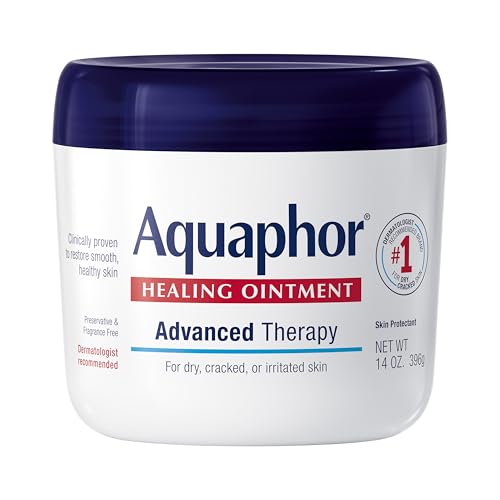
Aquaphor Healing OintmentOur pick The classic. Cheap, widely available, petroleum-based. Use thinly for the first 2–3 days only. | ★ 4.8 139,088 reviews | $18.37 | |
Mad Rabbit Tattoo Balm All-natural, vegan balm with the smoothest finish of anything we tested. Non-greasy, absorbs in seconds. | ★ 4.4 7,545 reviews | $18.85 | |
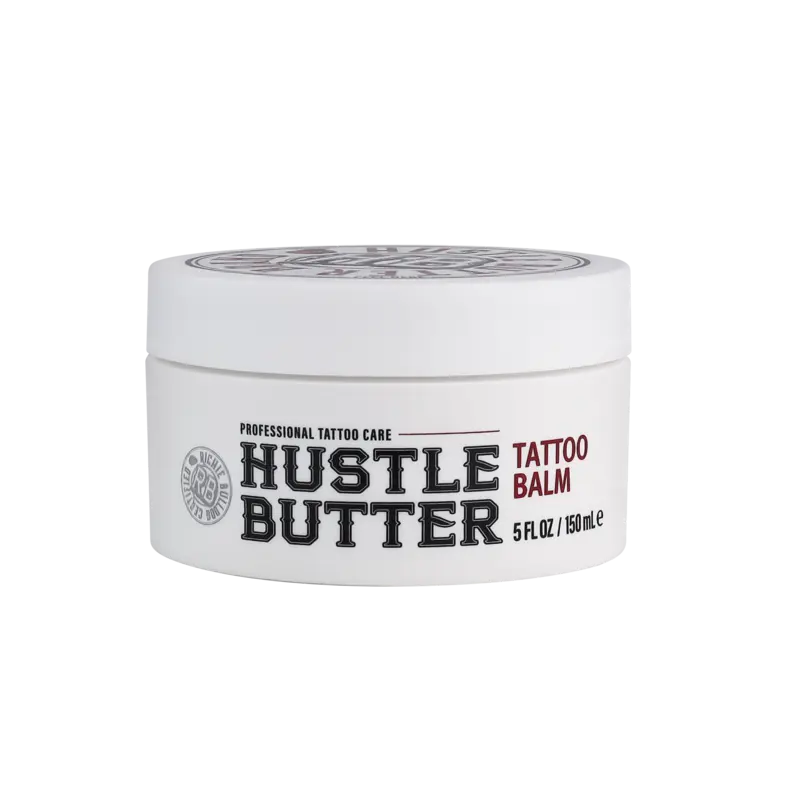
Hustle Butter Hustle Butter Deluxe A shop-floor staple for a reason. Shea + mango + coconut. Works during AND after the session. | ★ 4.7 35,578 reviews | $25 |
Ratings and review counts reflect Amazon customer aggregates (last verified 2026-05-16). Prices change; check the live listing. We may earn a commission.
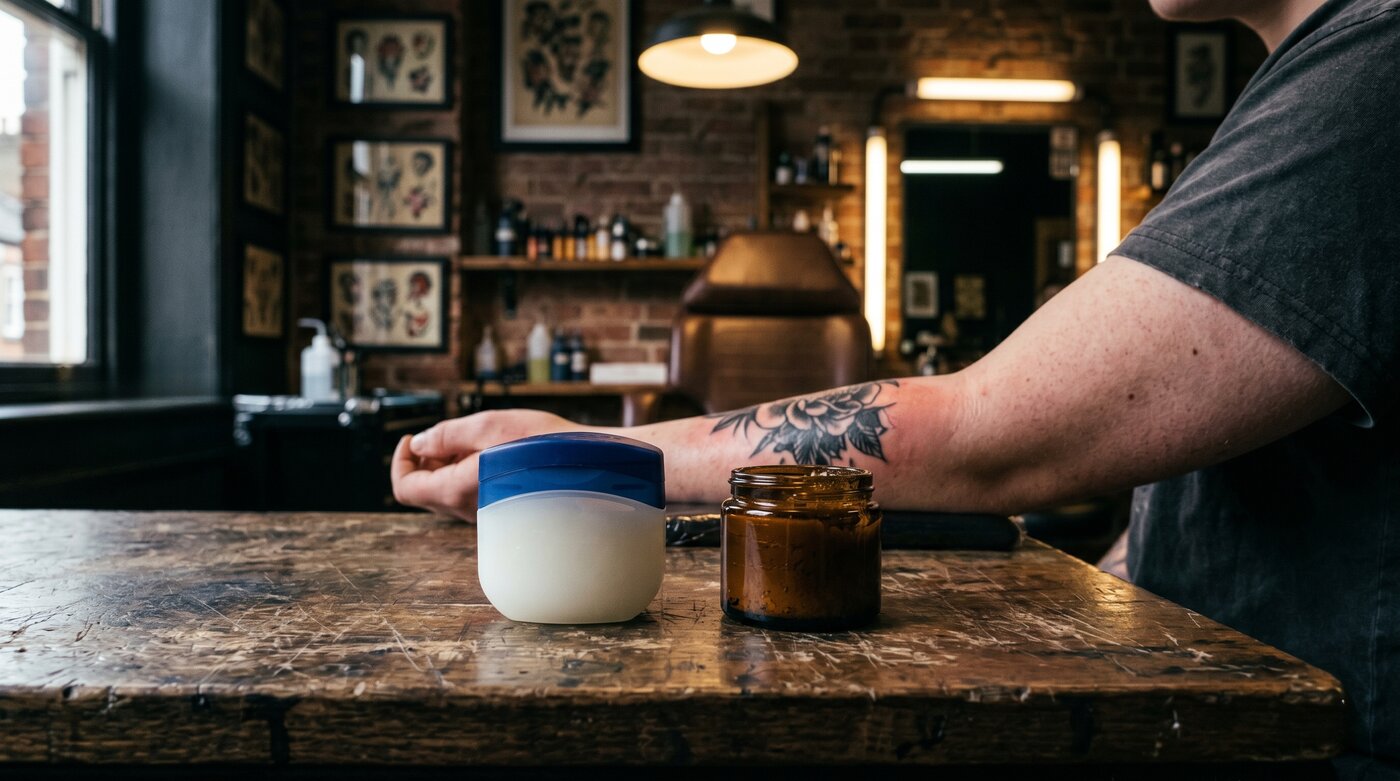
For three decades, “put Aquaphor on it” was the complete tattoo aftercare advice from most shops. It was dirt-cheap, available at every drugstore at midnight, and it worked, in the sense that tattoos healed while people used it, so nobody changed the protocol. Then a wave of dedicated tattoo balms hit the market around 2018–2020 and created a genuine debate: is the old standby still worth recommending, or did it get lapped?
We’ve used both approaches across multiple pieces. The honest answer is more nuanced than either side admits.
What Aquaphor actually is
Aquaphor is an occlusive petrolatum ointment: 41% petrolatum, plus glycerin, ceresin, lanolin alcohol, panthenol, bisabolol, and a few other humectants. The petrolatum seals the surface. The glycerin draws moisture in from beneath. The bisabolol (from chamomile) provides minor anti-inflammatory effect.
It doesn’t treat the tattoo. It creates a barrier that keeps the skin from cracking while the top layer of epidermis is disrupted. That’s the whole job, and petrolatum does it reliably.
The problem with Aquaphor isn’t that it doesn’t work. It’s that most people use too much of it.
A thick layer of petrolatum over a fresh tattoo traps bacteria, blocks oxygen exchange, and creates a warm, moist environment that can cause ink to draw out with the plasma. That’s what people mean when they say Aquaphor “pulled” their ink: they were essentially drowning the tattoo in ointment. A correct Aquaphor application is so thin you can barely tell it’s there.
What modern tattoo balms do differently
Products like Mad Rabbit Tattoo Balm and Hustle Butter are formulated to be absorbed, emollient rather than occlusive. They don’t sit on top of the skin forming a seal. Instead, they penetrate the upper skin layers and provide moisture from within while allowing the surface to breathe.
The practical result:
- Easier to apply correctly: thicker application is tolerated because it absorbs
- Less risk of the over-application mistake that causes ink loss
- More pleasant to use (no greasy shine, better for clothing)
The trade-off:
- They cost more. Aquaphor is about $0.60 per ounce at Costco. Mad Rabbit runs about $11/oz. Hustle Butter is closer to $4/oz but still well above petrolatum.
- For people who apply correctly, Aquaphor isn’t meaningfully inferior during the first 3 days.
Days 1–3: The case for Aquaphor
Here’s when Aquaphor still earns its reputation: the first 72 hours, applied correctly.
A thin smear of Aquaphor immediately after removing a bandage (or immediately after artist-applied plastic wrap) creates a reliable protective barrier. It’s forgiving of minor rubbing from clothing. It’s accessible: if you forget to buy a balm beforehand, every Walgreens has it. And at the correct application thickness, it performs comparably to any balm for basic skin protection.
The protocol that works: Apply Aquaphor no thicker than you’d apply ChapStick, almost a sheen. Do this 2–3 times daily for the first 3 days. Switch to something lighter (Mad Rabbit, CeraVe) once the tattoo stops weeping.
Days 4–14: This is where it falls behind
The peel phase is where Aquaphor’s occlusive nature becomes a liability. Once the surface has stopped weeping and the flaking begins, you don’t want an occlusive layer. You want the skin to breathe while staying hydrated. Petrolatum traps heat and moisture in a way that can make the peeling itch worse and, in some people, cause small breakouts along the tattoo border.
Mad Rabbit during the peel phase is a noticeably better experience. Less itch, thinner and cleaner flakes, better final saturation. We’ve run this comparison enough times to say it clearly: if you have the budget, switch to a non-petrolatum balm by day 4.
The ingredient issue: petroleum base
The other argument against defaulting to Aquaphor is philosophical. Petrolatum is a petroleum derivative: it’s refined crude oil. That’s not inherently dangerous (the refining process makes it safe for skin contact), but if you’d prefer a product without petroleum or lanolin in it, every dedicated tattoo balm on the market qualifies.
For people with eczema-prone or acne-prone skin, petrolatum can absolutely clog pores. It’s comedogenic for some people. Mad Rabbit and Hustle Butter are both non-comedogenic, a real advantage for tattoos on areas like the chest, back, or upper arm where skin is more acne-susceptible.
The honest comparison by use case
Aquaphor wins when:
- You need something tonight and everything else is closed
- You’re confident in thin application and want the cheapest option
- You’re healing a tattoo on a low-sebum area (shin, calf) where clogged pores aren’t a concern
- You have 1–3 days of fresh-wound phase left and a balm isn’t available
Mad Rabbit wins when:
- You’re in days 4–14 (peel phase) of healing
- You want a non-petroleum, vegan option
- You have acne-prone or oily skin on the tattoo area
- You care about final saturation enough to spend ~$11 more
Hustle Butter wins when:
- You want one product for both the fresh phase and the heal
- You get tattooed often and want per-ounce value relative to Mad Rabbit
- You appreciate the dual-use (artists use it during sessions as a glide)
Price breakdown
Current prices:
- Aquaphor 14 oz: ~$18, enough to heal 20+ tattoos correctly
- Mad Rabbit Balm 2 oz: ~$23, enough for 1–2 pieces
- Hustle Butter 5 oz: ~$25, enough for 3–4 pieces
If you’re a first-timer healing one tattoo: Aquaphor is hard to argue against on price. If you’re a collector with three or four pieces a year, the better heal quality from a dedicated balm justifies the cost difference.
What we’d do
For a standard 3×5-inch piece on the forearm: Aquaphor for days 1–3, Mad Rabbit for days 4–14, then CeraVe Daily Moisturizing Lotion for long-term hydration. Total cost: maybe $45 for products that last multiple pieces.
For someone who wants a one-product approach: Hustle Butter start to finish.
For someone who genuinely can’t spend more than $5: Aquaphor applied thin, twice a day. It works if you use it right.
See our full aftercare guide for the complete protocol, including what to use after your tattoo fully heals, and why sunscreen is the actual most important long-term product.
Healing Ointment
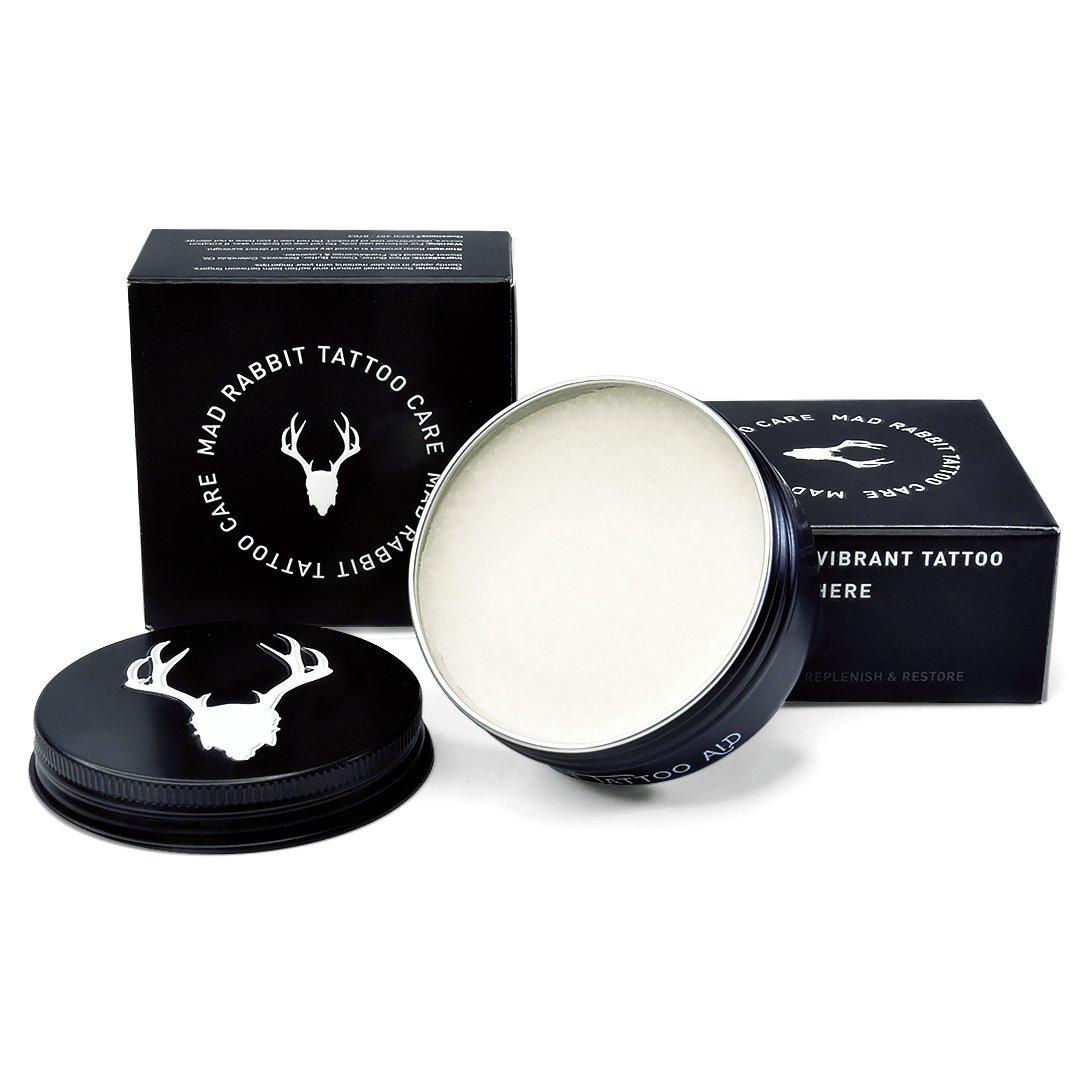
Tattoo Balm